Key takeaways
- Find the best camera flashes for portraits and low-light shots, from a round-head lithium speedlite to compact TTL flashes for Canon, Nikon and Olympus.
A good on-camera flash changes portraits and dim rooms more than a new lens does. It fills shadows under eyes, freezes a smile in a dark hall, and lets a kit lens shoot at a clean ISO instead of a noisy one. The catch is that flashes are mount-specific: a Canon TTL flash will not meter correctly on a Nikon body, and an Olympus TTL flash will not meter on a Sony body. Buying the wrong mount is the most common mistake in this category, so every pick below is tied to the camera system it was built for.
As an Amazon Associate, we earn from qualifying purchases.
Quick Answer
The Godox V1-C is the best camera flash for most portrait shooters, with a round head for soft falloff and a lithium battery that recycles fast. Nikon shooters should buy the Nikon SB-700 for full i-TTL metering, Canon shooters on a budget should buy the Godox TT685II-C, and Olympus and Panasonic shooters should buy the Godox TT685II-O.
How to Choose a Camera Flash
Guide number is the first number to compare. It measures how far the flash reaches at ISO 100, and a higher number means more power for large rooms and bounce work. A guide number of 43 metres covers a living room and a small event space. A guide number of 60 metres handles a hall with a high ceiling.
Mount and TTL system come next. TTL means the camera meters the flash output through the lens, so exposure stays correct as distance changes. Canon cameras use E-TTL II, Nikon cameras use i-TTL, and Olympus and Panasonic cameras use their own TTL protocol. A flash built for one mount will fire on another brand through the centre pin, but only in manual mode, with no automatic metering. Mount letters: C is Canon, N is Nikon, S is Sony, O is Olympus and Panasonic, F is Fujifilm.
Battery type decides how the flash behaves during a long shoot. Lithium-ion packs recycle in about a second and a half and deliver hundreds of full-power flashes on one charge. AA-powered flashes are cheaper to feed and easy to keep going with spare cells, but they recycle more slowly and fade as the cells drain.
Recycle time matters when the moment does not repeat. A flash that needs four seconds between full-power pops will miss the second frame of a laugh. A flash that recycles in under two seconds keeps up with a burst of portraits.
Bounce and wireless control round out the choice. A head that tilts up lets the flash fire at the ceiling for soft, even light, and a head that also rotates sideways lets it bounce off a wall when the ceiling is too high or too dark. A built-in radio receiver lets the flash work off-camera with a matching trigger.
1. Godox V1-C — Best Overall Round-Head Flash

The Godox V1-C is the flash to buy when portraits are the job. Its round head spreads light more evenly than a rectangular head, so skin tones look softer and the falloff from bright to dark is gentler. For headshots and half-length portraits, that round head is the single biggest visible difference in this group.
Power comes from a lithium-ion battery rated at 76 watt-seconds, delivering about 480 full-power pops on a charge with a recycle time near 1.5 seconds. The guide number is 92 metres at ISO 100, the highest in this group, so bouncing off a high ceiling still leaves plenty of light. The V1-C speaks Canon E-TTL II, supports high-speed sync up to 1/8000 of a second for wide-aperture portraits in daylight, and its built-in 2.4 GHz radio works as master or slave. The honest flag is the mount: this is the Canon version, model V1-C, and it will not meter correctly on a Nikon, Sony, or Olympus body, so a Nikon shooter should look for the V1-N instead.
Specs
- Brand Godox; Model V1-C; Mount Canon E-TTL II; Guide number 92 m at ISO 100; Battery lithium-ion 76 Ws, about 480 full-power flashes; Recycle about 1.5 s; High-speed sync 1/8000 s; Wireless 2.4 GHz radio, master and slave; Head tilt -7 to 120 degrees, rotation 330 degrees; ASIN: B0DPMDBG44
2. Nikon SB-700 — Best Nikon TTL Flash

The Nikon SB-700 is the flash for Nikon shooters who want first-party metering without the size and weight of the flagship model. It speaks i-TTL, so a Nikon body controls it fully, including the balanced fill-flash mode that keeps backgrounds bright while the subject stays lit.
The guide number is 28 metres at ISO 100, which is lower than the Godox models here, but it is enough for portraits, small events, and bounce work in a normal room. The zoom head covers 24 to 120 mm, the head tilts from minus 7 to 90 degrees, and it rotates 180 degrees in either direction. The flash runs on four AA cells, and a thermal cut-off protects it from overheating during a fast run of shots. It can also command other Nikon flashes or act as a remote unit in a Nikon wireless setup. The honest flag is power: at 28 metres it will struggle to bounce off a very high ceiling, and four AA cells mean carrying spares and watching recycle time slow as the cells drain.
Specs
- Brand Nikon; Model SB-700; Mount Nikon i-TTL; Guide number 28 m at ISO 100; Battery 4x AA; Zoom head 24-120 mm; Head tilt -7 to 90 degrees, rotation 180 degrees each way; Wireless commander and remote, Nikon CLS; Thermal cut-off protection; ASIN: B0042X9L6A
3. Godox TT685II-C — Best Value Canon TTL Flash

The Godox TT685II-C is the best value flash for Canon shooters. It delivers a guide number of 60 metres, the same 2.4 GHz radio system as the V1-C, and the same high-speed sync up to 1/8000 of a second, at a much lower cost than the round-head V1-C.
The flash runs on four AA cells and delivers about 330 full-power flashes with recycle times from 0.1 to 2.6 seconds. The zoom head covers 20 to 200 mm, the head tilts from minus 7 to 120 degrees, and it rotates 330 degrees. TCM converts a TTL exposure into a manual setting with one button. The honest flag is the battery: four AA cells recycle more slowly than the V1-C lithium pack, and the recycle time stretches as the cells drain, so long sessions need a spare set of cells and a fast charger.
Specs
- Brand Godox; Model TT685II-C; Mount Canon E-TTL II; Guide number 60 m at ISO 100; Battery 4x AA, about 330 full-power flashes; Recycle 0.1-2.6 s; High-speed sync 1/8000 s; Wireless 2.4 GHz radio, master and slave, plus optical slave; Zoom head 20-200 mm; Head tilt -7 to 120 degrees, rotation 330 degrees; TCM instant conversion; ASIN: B09NYC6PCQ
4. Canon Speedlite 430EX III-RT — Best Compact Canon Flash
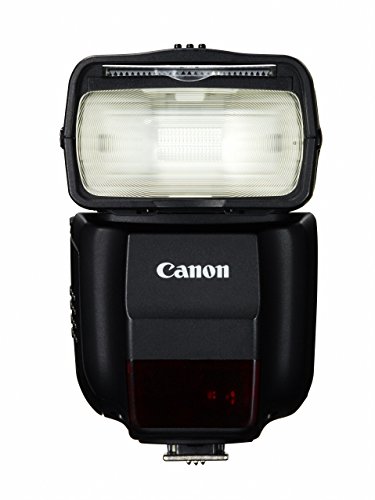
The Canon Speedlite 430EX III-RT is the compact first-party flash for Canon owners who want a light, simple unit that just works. It speaks E-TTL II, so a Canon body meters it automatically, and it includes Canon radio transmission, which lets it work off-camera with other Canon RT flashes and triggers without extra receivers.
The guide number is 43 metres at ISO 100, which covers portraits, family gatherings, and small event spaces. The zoom head covers 24 to 105 mm, the head tilts from minus 7 to 90 degrees, and it rotates 180 degrees in either direction. The flash runs on four AA cells, and the body is smaller and lighter than the Godox models here. The honest flag is availability: some retailers describe this model as discontinued, and Canon USA lists the refurbished version as out of stock, so new stock now comes mainly through third-party sellers. Confirm the listing is live before ordering.
Specs
- Brand Canon; Model Speedlite 430EX III-RT; Mount Canon E-TTL II; Guide number 43 m at ISO 100; Battery 4x AA; Zoom head 24-105 mm; Head tilt -7 to 90 degrees, rotation 180 degrees each way; Wireless Canon RT radio, master and slave; Dot-matrix LCD; ASIN: B010W2MAOO
5. Godox TT685II-O — Best Olympus and Panasonic TTL Flash
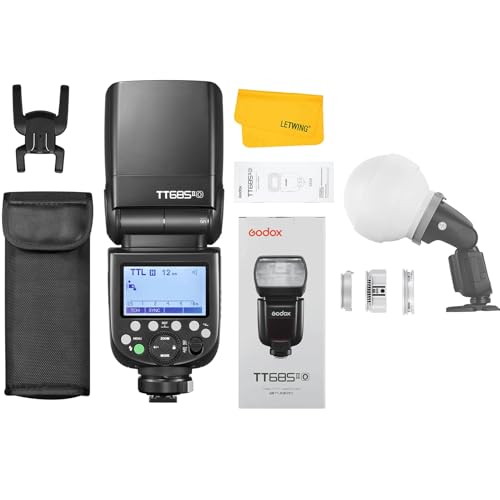
The Godox TT685II-O is the Olympus and Panasonic version of the same TT685II flash that takes the value pick above. It shares the guide number of 60 metres, the 2.4 GHz radio system, high-speed sync up to 1/8000 of a second, and the zoom head that covers 20 to 200 mm.
The flash speaks the TTL protocol used by Olympus and Panasonic bodies, so exposure metering works automatically, and it operates as a radio master or slave within the Godox X system. It runs on four AA cells, delivers about 330 full-power flashes, and recycles in 0.1 to 2.6 seconds. The head tilts from minus 7 to 120 degrees and rotates 330 degrees. The listing also includes a Godox ML-CD15 diffusion dome kit, a mini stand, and colour filters. The honest flag is availability and the mount: an Amazon crawl of this listing showed no featured offers at the time, so confirm the listing is live before ordering. Do not confuse it with the Canon version above: both are called TT685II, but the C version meters only on Canon bodies and the O version meters only on Olympus and Panasonic bodies.
Specs
- Brand Godox; Model TT685II-O; Mount Olympus and Panasonic TTL; Guide number 60 m at ISO 100; Battery 4x AA, about 330 full-power flashes; Recycle 0.1-2.6 s; High-speed sync 1/8000 s; Wireless 2.4 GHz radio, master and slave, plus optical slave; Zoom head 20-200 mm; Head tilt -7 to 120 degrees, rotation 330 degrees; Bundle includes ML-CD15 diffusion dome kit, mini stand, colour filters; ASIN: B0BKL2C22Y
Who Should Skip a Camera Flash
A flash is the wrong purchase when the camera already does the job. Modern phones and recent mirrorless bodies handle dim rooms well, so a casual shooter who only takes family snaps may never need a flash. A flash is also wrong for venues that ban them, such as some concerts, museums, and ceremonies, where a fast lens is the only option.
Studio photographers should skip these on-camera flashes and buy studio strobes instead. Anyone who owns a camera from a system with no pick here should also wait: this guide covers Canon, Nikon, Olympus, and Panasonic mounts, and Sony and Fujifilm shooters need the S and F versions of these Godox flashes, which are different models with different codes.
Final Verdict
Buy the Godox V1-C when portraits are the priority and the budget allows a lithium-powered flash. Buy the Nikon SB-700 when the camera is a Nikon and first-party metering matters more than raw power. Buy the Godox TT685II-C when the camera is a Canon and value matters most, and buy the Canon Speedlite 430EX III-RT when a compact first-party Canon flash is the goal and the listing is live. Buy the Godox TT685II-O when the camera is an Olympus or Panasonic body. Whichever flash you choose, match the mount letter to the camera first, because that single check decides whether TTL metering works at all.
Frequently Asked Questions
Do I need a flash from the same brand as my camera?
No, but the flash must speak the same TTL protocol as the camera. A Godox flash built for Canon meters correctly on a Canon body, while the same Godox flash built for Nikon meters correctly on a Nikon body. Match the mount letter in the model name to the camera brand.
What guide number do I need for portraits?
A guide number of 43 metres covers portraits in a living room and bounce work off a normal ceiling. A guide number of 60 metres handles larger rooms and higher ceilings.
Are lithium battery flashes better than AA flashes?
Lithium packs recycle faster, hold their speed as they drain, and deliver hundreds of full-power flashes on one charge, which suits long portrait sessions. AA flashes cost less to feed, and spare cells are easy to carry, but they recycle more slowly and fade as the cells drain. For occasional use, AA cells are fine.
Can I use one flash off-camera?
Yes. All five flashes here can work as radio slaves, so a matching trigger on the camera hot shoe can fire them from a stand. The Godox models share one radio system, so one trigger can control several Godox flashes at once. Off-camera flash gives directional light that looks far more natural than light fired straight from the camera.
Product and ASIN Reference
| Product | ASIN |
|---|---|
| Godox V1-C | B0DPMDBG44 |
| Nikon SB-700 | B0042X9L6A |
| Godox TT685II-C | B09NYC6PCQ |
| Canon Speedlite 430EX III-RT | B010W2MAOO |
| Godox TT685II-O | B0BKL2C22Y |