Key takeaways
- Find the best Toyota Tundra battery by group size first: 24F and 27F fitments explained, plus AGM picks with published CCA, reserve capacity and warranty specs.
As an Amazon Associate we earn from qualifying purchases.
Affiliate Disclosure: This article contains affiliate links. If you buy through a link on this page, we may earn a commission at no extra cost to you. Product specifications are taken from the manufacturers’ published listings and data sheets, and we have not personally tested these batteries.


A Toyota Tundra does not take one single battery. Depending on the model year, engine, and whether the truck was built with a cold-climate or heavy-duty package, the tray under the hood accepts either a Group 24F battery or the larger Group 27F battery. Buying the wrong group is the most common and most expensive mistake Tundra owners make, because a battery that is physically too long will not sit in the tray, and a battery with the terminals reversed will not connect safely. This guide therefore starts with fitment, then moves to the short list of batteries that match those two groups, and finally explains how to read cold cranking amps, reserve capacity, and chemistry so the battery you order is the battery your truck actually needs.
Quick answer
If your Tundra takes a Group 24F battery, the WEIZE Platinum AGM Group 24F and the 1AUTODEPOT BCI Group 24F are the two most clearly documented options sold for that exact group, each publishing 710 CCA, 70 Ah of capacity, and 120 minutes of reserve capacity in an AGM case. If your Tundra takes the larger Group 27F battery, look at the Odyssey Performance ODP-AGM27F and the OPTIMA YellowTop D27F, both built as 27F AGM batteries for trucks that tow, run accessories, or work in cold weather. Whichever group your truck uses, confirm the group printed on the label of the battery already in the truck before you order. That one check prevents almost every return.
What battery group size does a Toyota Tundra use?
Published fitment guides for the Tundra list two main groups. Group 24F is the standard fit across a wide range of years and engines, including many V6 and V8 trucks. Group 27F is the larger optional fit listed for certain V8 trucks, particularly those with a cold-climate package or an optional heavy-duty battery from the factory. Later guidance for newer trucks continues to list 24F as a common fit, which is why you will see both groups sold for the same model name.
The letter F matters. It indicates the terminal layout is reversed compared with the plain group of the same number, so the positive and negative posts sit on the sides the Tundra’s cables expect. A Group 24 battery is not a substitute for a Group 24F battery even though the cases look similar, because the cables may not reach, or may reach only by stretching across the case in a way that risks a short. Always match the full group code, including the F.
Group size controls three things: the length, width, and height of the case, the type of terminal, and which side the positive post sits on. It does not by itself tell you how strong the battery is. Two 24F batteries can differ widely in cold cranking amps and reserve capacity, so after you confirm the group, you still need to compare the ratings.
How we chose these batteries
Every battery in this guide is a 12-volt automotive starting battery in Group 24F or Group 27F, the two groups published for the Tundra. We favoured absorbed glass mat, or AGM, designs because a full-size truck that tows, idles with accessories running, or works off paved roads puts more vibration and deeper discharge demands on a battery than a small commuter car does, and AGM construction is built for exactly that kind of use. We used only specifications published by the maker or in the product listing, such as cold cranking amps, amp-hour capacity, reserve capacity, case dimensions, and warranty length. Where a United States Amazon listing for an exact model could not be confirmed from indexed sources, we say so plainly next to that pick instead of inventing a code.
The picks in detail
1. WEIZE Platinum AGM Battery, BCI Group 24F
The WEIZE Platinum AGM in Group 24F is the clearest documented 24F pick for a Tundra. The listing publishes 710 cold cranking amps, a 70 Ah capacity, and 120 minutes of reserve capacity, in a case measuring 10.75 inches long by 6.81 inches wide by 8.98 inches high. Those cranking amps sit comfortably above the minimum figures published for earlier Tundra engines, which gives a useful margin for cold mornings and for a starter motor that is no longer new.
As an AGM battery, the WEIZE is sealed and maintenance free, and the maker positions it for start-stop support as well as conventional starting duty. The tapered terminals are arranged with the negative on the left and the positive on the right, which is the layout a 24F application expects, but you should still compare that layout with the battery coming out of your truck. The listing carries a 36-month warranty, which is the period to note if you keep the truck for several winters.
Choose this battery if your Tundra’s current battery is labelled 24F, you want an AGM upgrade over a basic flooded battery, and you want the full specification published in one place before you buy. Skip it if your truck’s label says 27F, because the larger tray and hold-down are built for a longer case, and a shorter battery can move under the clamp if it is not secured exactly as the truck maker intended.
2. 1AUTODEPOT BCI Group 24F Car Battery
The 1AUTODEPOT Group 24F battery publishes a closely comparable specification: 12 volts, 70 Ah of capacity, 710 CCA, and 120 minutes of reserve capacity, in a premium maintenance-free AGM design with a 36-month warranty stated in the listing. On paper it matches the WEIZE figure for figure, which makes it a useful second option in the same group when you are comparing two listings side by side.
Because the headline ratings are the same, the deciding details are the smaller ones. Check the exact case dimensions in the listing against your tray, confirm the terminal orientation matches your cables, and read how the seller handles warranty claims for a heavy automotive battery, since returning a battery is never as simple as returning a small parcel. Also check the date and freshness information the seller provides, because a battery that has sat discharged on a shelf for a long time starts its life in your truck already weakened.
Choose this battery if your Tundra takes a 24F and you want a second AGM option with the same published cranking and reserve figures to compare against the WEIZE. As with any 24F pick, it is the wrong battery for a truck whose fitted battery is a 27F, no matter how similar the ratings look.
3. Odyssey Performance ODP-AGM27F
ASIN: N/A — no confirmed Amazon US listing for this exact 27F model was found in indexed sources during research; the manufacturer’s own data sheet for the ODP-AGM27F was used for specifications. The similar Odyssey 27M marine model sold online is a different battery and is not a substitute.
For Tundras fitted with the larger 27F battery, the Odyssey Performance ODP-AGM27F is the heavy-duty reference point. The manufacturer’s data sheet lists 850 cold cranking amps, an 85 Ah capacity at the 20-hour rate, and 182 minutes of reserve capacity, in a Group 27 case measuring about 12.5 inches long by 6.8 inches wide by 8.8 inches high including terminals, weighing about 59.7 pounds. It uses thin plate pure lead AGM construction, which the maker describes as combining strong starting power with deep-cycle capability.
That reserve capacity figure is the one towing and worksite drivers should notice. Reserve capacity describes how long a battery can keep essential loads running if the charging system fails, and a figure well above the 24F picks reflects the larger case and greater active material inside a 27F battery. The trade-offs are weight and size: this battery only belongs in a truck whose tray, hold-down, and original label are for a 27F, and at nearly sixty pounds it is a two-handed lift in an awkward engine bay.
Choose this battery if your Tundra’s fitted battery is a 27F, you tow or run sustained accessory loads, and you want the strongest published cranking and reserve figures in this guide. Because no confirmed Amazon US listing for the exact model was verified for this article, check availability through established battery retailers and confirm the full model code ODP-AGM27F before paying.
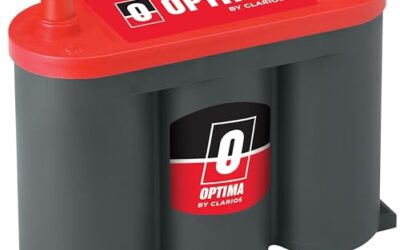
4. OPTIMA YellowTop D27F
ASIN: N/A — no confirmed Amazon US ASIN for this exact D27F model was verified from indexed sources during research; specifications below are from OPTIMA’s published model data. Do not substitute a different YellowTop group size on the strength of the brand name alone.
The OPTIMA YellowTop D27F is the other established 27F option, built around OPTIMA’s SpiralCell AGM design. Published model data lists 830 cold cranking amps, a 66 Ah capacity, and 140 minutes of reserve capacity, in a case about 12.16 inches long by 6.76 inches wide by 8.61 inches high, weighing about 53.2 pounds, with SAE posts. The YellowTop line is OPTIMA’s dual-purpose range, positioned for both engine starting and the repeated deeper discharge that comes from winches, auxiliary lighting, audio systems, and other added electrical loads.
Compared with the Odyssey 27F above, the YellowTop publishes a lower amp-hour and reserve figure but a similar cranking rating, and it is somewhat lighter. That makes it a sensible 27F choice for a Tundra that carries electrical accessories and sees off-road vibration, where a sealed spiral-wound AGM case is part of the appeal. It is still a group-specific battery: a D27F belongs only in a truck fitted for a 27F, and other YellowTop sizes such as the smaller groups sold for cars are not interchangeable with it.
Choose this battery if your Tundra is a 27F truck with added electrical loads and you value dual-purpose deep-cycle tolerance. Verify the exact model code D27F and the seller before ordering, since the verified listing status for this article is noted above.
24F or 27F: how to decide in five minutes
Open the hood and read the label on the battery already fitted. The group code is printed on the top or side label, and it is the single most reliable fitment source for your specific truck, because it reflects the engine, package, and market the truck was actually built with. If the label is unreadable, check the owner’s manual for the specified group, and measure the tray length: a 27F case is noticeably longer than a 24F case.
Next, look at the terminal layout. Photograph the old battery before disconnecting it, noting which cable reaches which post. Then compare the CCA figure on the old label with the replacement: the new battery should meet or exceed the factory figure, especially on V8 trucks and in cold climates, where published guidance for optional 27F fitments lists higher minimum cranking figures than for standard fitments.
Finally, consider how the truck is used. A daily-driven Tundra on a standard 24F fitment is well served by either 24F AGM pick above. A truck that tows, ploughs, winches, or runs a fridge and lights at camp draws harder on reserve capacity, and if it was built with a 27F tray, the larger batteries exist precisely for that duty. Do not try to upgrade a 24F truck to a 27F battery on ratings alone; the case has to fit the tray and clamp first.
AGM or flooded: which is right for a Tundra?
A conventional flooded battery is the traditional choice and remains serviceable for a standard truck in a mild climate, provided its water level and terminals are maintained. An AGM battery seals the electrolyte in glass mats, which makes it spill-resistant, more tolerant of vibration, and better able to accept charge and handle repeated deeper discharge. Those traits suit a large truck that works hard, travels rough roads, or powers accessories with the engine off.
AGM batteries do ask for correct charging. If you maintain the truck with a bench charger, use a charger with an AGM setting, and follow the battery maker’s charging voltage guidance. Mixing a deeply discharged AGM battery with an unsuitable charger is a common way to shorten the life of an otherwise good battery. Whichever chemistry you choose, keep the terminals clean and the hold-down tight, because a loose battery in a heavy truck vibrates itself to an early failure.
Signs your Tundra battery is due for replacement
Slow cranking on the first start of the day, especially after the truck has sat overnight, is the classic warning. Other signs include headlights that dim noticeably at idle, electrical accessories that behave erratically, a battery case that looks swollen, corrosion that keeps returning to the terminals, and a battery that needs jump starts after short stops. Age matters too: if the battery is several years old and any of these symptoms appear together, replacement before winter is cheaper than a recovery call in winter.
A single flat battery after lights were left on is not by itself proof of failure. Recharge the battery fully and have it tested before condemning it. But a battery that repeatedly tests below its rated cranking figure, or that cannot hold charge overnight, has reached the end of its useful life regardless of how new it looks.
Installation and safety notes
Replacing a truck battery is straightforward but not trivial, because these batteries are heavy and the cables carry enough current to do damage if shorted. Wear eye protection, remove metal jewellery, and follow the truck maker’s procedure for disconnecting the negative terminal first and reconnecting it last. Lift with your legs and, for a 27F battery, get help rather than leaning over the wing with the full weight at arm’s length.
Before fitting the new battery, clean the tray and the cable clamps, and make sure the hold-down secures the case without cracking it. After fitting, check that the cables are not strained, that the positive terminal cover is in place, and that the truck starts cleanly with no warning lights beyond those the manual says may need a short relearn drive. Take the old battery back for recycling through the retailer or a local collection point; automotive batteries are almost entirely recyclable and should never go in household waste.
Frequently asked questions
What size battery does a Toyota Tundra take?
Most Tundras take a Group 24F battery, and certain V8 trucks built with a cold-climate or optional heavy-duty package take the larger Group 27F. The label on your fitted battery is the deciding source for your truck.
How many cold cranking amps does a Tundra need?
Published minimum figures vary by year and engine, with standard fitments listed from around the mid-500s and optional 27F fitments listed at higher figures. Every pick in this guide publishes 710 CCA or more, which meets or exceeds those published minimums, but you should still match or exceed the figure on your old battery’s label.
Can I put a 27F battery in a Tundra that came with a 24F?
Only if the tray, hold-down, and cable reach are genuinely built for the longer case. In practice, replace like with like: order the group printed on the fitted battery’s label.
Is an AGM battery worth it in a Tundra?
For a truck that tows, works off-road, runs accessories, or lives in a cold climate, AGM construction offers better vibration tolerance and deep-discharge handling than a basic flooded battery. For a lightly used truck in a mild climate, the benefit is smaller but the sealed, maintenance-free design is still convenient.
Why does the terminal layout matter so much?
Because the Tundra’s cables are made to a fixed length for the F layout. A battery with the posts on the wrong sides forces cables to stretch or cross the case, which risks poor connections and short circuits. Match the full group code, including the F, every time.
Bottom line
The best Toyota Tundra battery is first of all the right group size. For the many trucks on Group 24F, the WEIZE Platinum AGM (ASIN: B0D6Y7KQYN) and the 1AUTODEPOT Group 24F (ASIN: B0DPQCWTZ7) both publish 710 CCA, 70 Ah, and 120 minutes of reserve capacity with a 36-month warranty stated in their listings. For trucks fitted with the larger Group 27F, the Odyssey ODP-AGM27F and the OPTIMA YellowTop D27F are the established heavy-duty names, with the ASIN caveats noted in their sections above. Read the label on the battery in your truck, match the group and terminal layout, meet or exceed its CCA figure, and the replacement will fit, connect, and start the truck the way the original did.