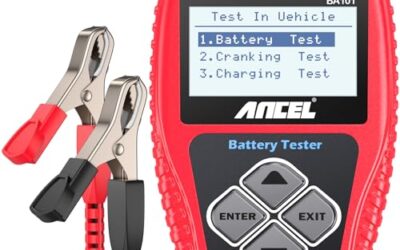
Our Short List of 3

- ASIN: B00099HVN6
- Voltage: 6 volts
- Cold cranking amps: 800 CCA
- Capacity: 50 Ah (C20)
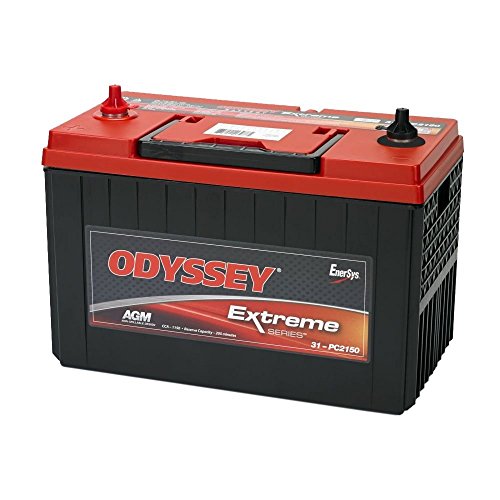
- ASIN: B002498NR2
- Voltage: 12 volts
- Cold cranking amps: 1,150 CCA (manufacturer rating for this model)
- Group size: 31
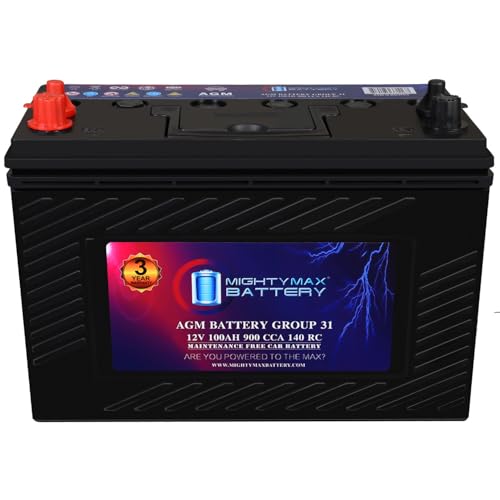
- ASIN: B0FPRKYWBF
- Voltage: 12 volts
- Cold cranking amps: 900 CCA
- Capacity: 100 Ah
All 3 Picks at a Glance
| Product | Specs | Action |
|---|---|---|
| 1. OPTIMA RedTop 6V — Best for Original 6-Volt Tractors |
| Check price on Amazon |
| 2. ODYSSEY Extreme Series Group 31 (31-PC2150S) — Best Heavy-Duty 12V Option |
| Check price on Amazon |
| 3. Mighty Max Battery MM-G31 — Best Value 12V Group 31 |
| Check price on Amazon |
Key takeaways
- Find the best battery for an old tractor, from a true 6V AGM for vintage 6-volt systems to heavy Group 31 12V options, with fit, CCA and polarity checks.
As an Amazon Associate we earn from qualifying purchases.
An old tractor rarely dies all at once. It just starts turning over a little slower each season, until one cold morning the starter groans, the solenoid clicks, and nothing else happens. When that day comes, the replacement battery is not a generic car battery buying decision. Vintage tractors were built around electrical systems that modern vehicles left behind decades ago: many pre-1960s machines run a 6-volt system, often with positive ground, while later classics use 12 volts with large battery boxes designed for heavy commercial group sizes. Buying the wrong voltage, the wrong group size, or a battery with the terminals in the wrong place can leave you with a battery that will not fit, will not connect, or in the worst case can damage a generator and regulator that were never designed for it.
This guide focuses on batteries that genuinely suit older farm tractors. The picks below cover the two situations owners actually face: keeping an original 6-volt system alive with a modern sealed battery, and feeding a 12-volt tractor (original or converted) with a heavy-duty battery that tolerates vibration, dust, long storage between jobs, and hard cold starts. Every specification cited here comes from the manufacturer or the product listing, and we explain the checks to run on your own machine before you order anything, because on a sixty-year-old tractor the manual, the battery box, and whatever a previous owner changed do not always agree with each other.
Quick Picks
- Best for original 6-volt tractors: OPTIMA RedTop 6V — a sealed AGM starting battery with very strong cranking power for a 6-volt unit, and no acid to top up.
- Best heavy-duty 12V option: ODYSSEY Extreme Series Group 31 (31-PC2150S) — a commercial-grade AGM battery marketed for farm, road, and jobsite work, with stud terminals and serious cranking output.
- Best value 12V Group 31: Mighty Max Battery MM-G31 — a Group 31 AGM starting battery with high capacity and reserve for tractors that sit between jobs.
Disclosure
Affiliate Disclosure: This article contains affiliate links. If you buy through a link on this page, we may earn a commission at no additional cost to you. Product specifications are taken from manufacturer and retailer listings, and availability can change, so confirm fitment and stock on the product page before ordering.
First, Work Out What Your Old Tractor Actually Needs
6 volts or 12 volts?
This is the single most important question, and guessing wrong is expensive. As a rough guide, most American farm tractors built before the mid-1950s left the factory with a 6-volt system: the Ford 8N, Farmall letter series, John Deere two-cylinders, Allis-Chalmers WD, and many others. Through the late 1950s and 1960s manufacturers moved to 12 volts, and diesel models adopted 12 volts earlier in some lines because diesel starting demands more cranking energy. Plenty of older tractors have since been converted to 12 volts with an alternator, which means the tractor’s age alone no longer tells you what is under the seat.
There are three reliable ways to check. First, count the filler caps or cells on the old battery: three cells means 6 volts, six cells means 12 volts. Second, read the voltage stamped on the generator or alternator tag, or on the coil. Third, if a battery is already installed and holds any charge, a multimeter across the terminals will settle it: a resting 6-volt battery reads roughly six and a half volts or a little less when charged, and a 12-volt battery reads around twelve and a half or more. Never install a 12-volt battery on a 6-volt system or the reverse; bulbs, gauges, coils, and regulators are all matched to system voltage.
Positive ground changes how you think, not what you buy
Many 6-volt tractors were wired positive ground, meaning the positive cable runs to the chassis. The battery itself does not care — a 6-volt battery works in either arrangement — but you must connect it exactly as the tractor is wired, and you must be careful with modern accessories, chargers, and jump packs that assume negative ground. When you replace the battery, photograph the cable routing before you disconnect anything, and reconnect positive to the grounded side exactly as it was. If you ever convert to 12 volts, that is a separate project involving the charging system, coil, bulbs, and gauge senders, and it deserves its own plan rather than being improvised during a battery swap.
Group size and the battery box
Old tractor battery boxes were sized for commercial BCI group sizes that are still standardized today. The classic 6-volt fitment is Group 1, a tall, narrow battery used across vintage tractors and trucks. Larger 12-volt tractors commonly use Group 31, one of the biggest standard sizes, or pairs of smaller batteries in series or parallel on diesel models. Measure your battery box in all three dimensions, note where the hold-down clamps grip, and check the terminal type: most older tractors use SAE top posts, while many commercial Group 31 batteries use threaded stud terminals that need eyelet cable ends or adapters. A battery that is electrically perfect but an inch too tall for the box lid is still the wrong battery.
Cold cranking amps and reserve capacity
For a starting battery, cold cranking amps (CCA) describe how much current the battery can deliver in cold conditions, and more CCA generally means easier winter starting on a worn engine with thick oil. Reserve capacity (RC) describes how long the battery can sustain a moderate load, which matters on tractors with generators that charge modestly and lights that draw real current. On a 6-volt system, remember that the starter draws roughly twice the current of an equivalent 12-volt starter, which is why heavy cables and clean connections matter so much on vintage machines, and why a high-CCA 6-volt battery transforms how an old tractor starts.
The Picks
1. OPTIMA RedTop 6V — Best for Original 6-Volt Tractors
- ASIN: B00099HVN6
- Voltage: 6 volts
- Cold cranking amps: 800 CCA
- Capacity: 50 Ah (C20)
The OPTIMA RedTop 6V is the standout choice for a tractor that still runs its original 6-volt system. Its headline number is the cranking output: the manufacturer rates this battery at 800 cold cranking amps, which is exceptional for a 6-volt battery and a major step up from the tired flooded battery most vintage tractors are limping along on. On a Ford 8N, a Farmall, or an early John Deere that has always been a reluctant starter, that extra cranking strength is exactly what a healthy starter motor needs to spin the engine with authority instead of grinding through compression strokes.
The construction matters as much as the numbers on a farm. The RedTop is a sealed AGM battery built around OPTIMA’s SpiralCell design, in which the lead plates are wound into spiral cells rather than stacked flat. The manufacturer positions this design as highly resistant to vibration, and vibration is a fact of life on a tractor that works over rough ground with a rigidly mounted engine. Because the battery is sealed and maintenance-free, there is no electrolyte to check or top up, no acid venting onto the battery box, and far less terminal corrosion to clean each season — a genuine benefit on a machine that may sit in a barn for weeks between jobs. It can also be mounted in a variety of positions, which helps when a vintage battery box is an awkward shape.
Fit needs one honest caveat. The RedTop 6V is a slim battery — a little over three and a half inches wide — so it is smaller than the Group 1 flooded battery it usually replaces. In most vintage battery boxes that simply means using the hold-down properly and, if the box is much wider, adding a spacer so the battery cannot slide. The SAE top posts suit the heavy cable ends found on most 6-volt tractors. Weight is another pleasant surprise: at roughly eighteen and a half pounds, it is far easier to lift in and out of a high battery box than a big flooded Group 1.
Choose this battery if your tractor is still 6-volt, you want to keep it that way, and you want the strongest, lowest-maintenance starting battery that fits the system without any conversion work. It is a starting battery, not a deep-cycle battery, so it is meant for cranking and normal tractor electrical loads rather than long accessory drains with the engine off.
2. ODYSSEY Extreme Series Group 31 (31-PC2150S) — Best Heavy-Duty 12V Option
- ASIN: B002498NR2
- Voltage: 12 volts
- Cold cranking amps: 1,150 CCA (manufacturer rating for this model)
- Group size: 31
If your old tractor is a 12-volt machine — a later diesel, a bigger row-crop tractor, or a vintage tractor that has already been converted — the ODYSSEY Extreme Series Group 31 is the heavy-duty end of the market. ODYSSEY markets this battery line squarely at commercial work, describing vehicles that operate, in its words, on the road, on the farm, or on the jobsite, and the design brief matches farm life: rugged construction, tightly packed pure lead plates, and a non-spillable AGM design intended to shrug off the shock and vibration that destroy ordinary batteries. The manufacturer also claims substantially more cycle life at deep discharge than conventional batteries, which suits a tractor that cranks hard, runs lights and accessories, and may sit discharged longer than it should.
The cranking rating is the headline: this is a battery built to turn over large, high-compression engines in cold weather, which is precisely the worst-case scenario for an older diesel tractor on a winter morning. The Group 31 footprint is the standard large commercial size, so if your tractor’s battery box was built for a Group 31 — many larger tractors from the 1960s onward were — this drops into the space the original battery occupied.
Two practical checks before ordering. First, the terminals: this model uses threaded stud terminals rather than SAE top posts, so look at your cable ends. Stud terminals pair with eyelet lugs; if your tractor has clamp-style post cables, you will need adapters or new cable ends, which is a small job but one to plan before the battery arrives. Second, the size and weight: a Group 31 is a big, heavy battery, so confirm the box dimensions and be ready with a second pair of hands or a lifting strap. Get those two details right and this is the battery for owners who want to install a 12-volt battery once and stop thinking about it for years.
3. Mighty Max Battery MM-G31 — Best Value 12V Group 31
- ASIN: B0FPRKYWBF
- Voltage: 12 volts
- Cold cranking amps: 900 CCA
- Capacity: 100 Ah
The Mighty Max MM-G31 covers the same Group 31, 12-volt ground as the ODYSSEY but at the more accessible end of the category. The listing rates it at 900 cold cranking amps with 100 amp-hours of capacity and a 140-minute reserve capacity, a combination aimed at starting duty with enough reserve behind it for a tractor that runs lights, a cab fan, or implements’ electrical loads during long days. As a sealed AGM battery it needs no water checks, resists spilling if the tractor works on slopes, and tolerates being mounted in an enclosed battery box without venting concerns.
For an older 12-volt tractor that works seasonally — mowing, blading, loader work on weekends — this profile makes sense. The cranking output is well beyond what a gasoline tractor of the 1960s or 1970s ever had from the factory, and the reserve capacity gives margin when a tired charging system is part of the machine’s character. As with any Group 31, measure the box first and confirm terminal layout against your cables, and treat the manufacturer’s fitment guidance on the listing as the authority for your specific machine.
Between this battery and the ODYSSEY, the honest dividing line is duty. The Mighty Max suits a tractor in regular but not punishing service. The ODYSSEY is the pick when the tractor is a working diesel that must start in deep cold, every time, for years. Both are the same group size and voltage, so the choice is about how hard the battery will be worked, not about fit.
What About a Plain Flooded Group 1 Battery?
Owners of 6-volt tractors will notice the traditional option is not in the picks above: a flooded Group 1 battery from a farm supply store. That style of battery remains the period-correct fit for many vintage tractors, it drops straight into the original box with no spacer, and local farm stores stock it because demand from the vintage tractor world keeps it alive. Its trade-offs are the familiar ones: it needs electrolyte level checks, it vents acid fumes that corrode the box over time, and its cranking output is modest next to the OPTIMA 6V. If originality and exact box fit are your priorities, a fresh flooded Group 1 from a reputable local source is a defensible choice. If starting strength and zero maintenance matter more, the sealed AGM route is better. What we would not do is fit a small 6-volt SLA battery meant for lawn equipment or emergency lighting; those are a different product type with a fraction of the cranking ability a tractor starter demands.
Installation and Care Tips for Vintage Tractors
Clean connections matter more than battery brand. On a 6-volt system especially, resistance at corroded terminals and tired ground straps eats the voltage your starter needs. Wire-brush the cable ends and posts, replace any cable that is green, swollen, or frayed, and make sure the ground strap bonds cleanly to the chassis or engine. Many “bad battery” complaints on old tractors are really bad cable complaints.
Use the right charger settings. Charge a 6-volt battery with a charger that has a true 6-volt mode, and an AGM battery with an AGM-appropriate profile. A maintainer over winter storage is the cheapest life-extender there is for a tractor battery, because batteries that sit discharged sulfate and lose capacity permanently.
Respect polarity and ground. Photograph the old installation, keep positive-ground wiring exactly as found, and never let a wrench bridge the terminals. On positive-ground tractors, be extra careful with modern jump packs and chargers; connect according to the battery’s own positive and negative markings, not by cable color assumptions.
Secure the hold-down. A battery that can bounce in its box will fail early no matter how good it is. If you fit a slimmer AGM battery in a Group 1 box, add a spacer so the hold-down clamps the battery firmly.
Buying Checklist
- Confirm system voltage by counting cells on the old battery or measuring with a multimeter.
- Note whether the tractor is positive or negative ground, and photograph the cable routing.
- Measure the battery box and record the original group size if it is marked.
- Check terminal type — SAE posts or threaded studs — and cable end style.
- Match CCA to your climate and engine: diesels and cold climates want the higher ratings.
- Plan charging: a charger or maintainer that supports your voltage and AGM batteries if you choose AGM.
Verdict
For an old tractor still running its original 6-volt system, the OPTIMA RedTop 6V (ASIN: B00099HVN6) is the clearest upgrade available: very strong cranking for a 6-volt battery, sealed construction, and no maintenance. For 12-volt tractors with a Group 31 box, the ODYSSEY Extreme Series Group 31 (ASIN: B002498NR2) is the heavy-duty choice built for farm and commercial punishment, while the Mighty Max MM-G31 (ASIN: B0FPRKYWBF) delivers the same size and voltage with strong starting numbers for tractors in lighter service. Whichever you choose, spend ten minutes on cables and connections while the battery is out — on vintage iron, that habit is worth as much as the battery itself.