Our Short List of 3

All 3 Picks at a Glance
| Product | Specs | Action |
|---|---|---|
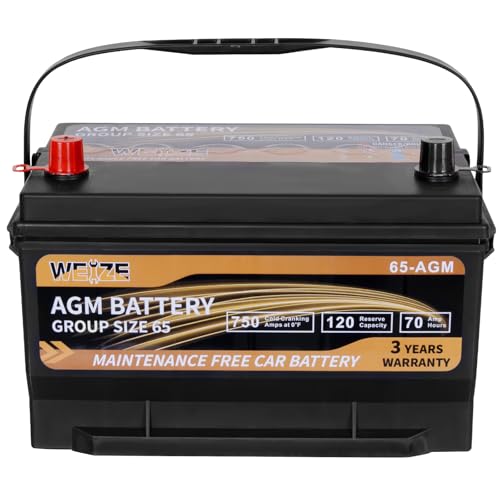
| WEIZE Platinum AGM Group 65 (ASIN B0G5115BXS): The Truck and SUV Workhorse | Check price on Amazon | |
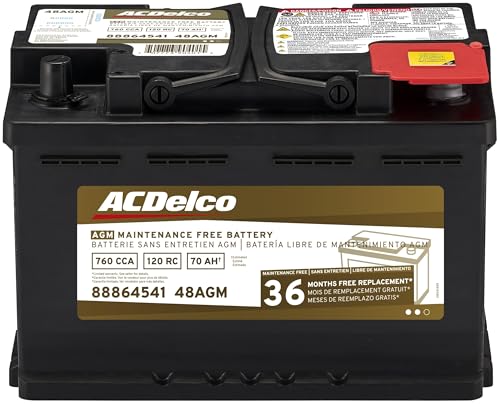 ACDelco Gold 48AGM (ASIN B008FWCLHU): The Modern Car Reference | Check price on Amazon | |
| OPTIMA RedTop 34/78 (ASIN B00075OSC4): The Dual-Terminal Starting Specialist | Check price on Amazon |
Key takeaways
- A grounded automotive battery roundup by group size: WEIZE Group 65, ACDelco 48AGM and OPTIMA RedTop 34/78, with fitment first and specifications from listings.
A car battery is not a generic purchase, and any roundup that treats it as one is setting its readers up for a return. The battery your vehicle takes is fixed by its tray, its cable reach and its terminal layout, all captured in the group size, and only after the group is settled does the interesting comparison begin: which battery in that group suits how the vehicle is actually used. This roundup is organised on that principle. It covers three widely used group sizes with one verified battery in each, every one confirmed against its Amazon listing record and independent records of that same listing, with specifications taken from those records. Fitment comes first in each section, because a battery that does not fit is not a recommendation at all, and the duties each battery suits are stated plainly so the right comparison is the one you end up making.
Disclosure: As an Amazon Associate, this site may earn from qualifying purchases made through links in this article, at no additional cost to you.
How to Read Your Group Size
The group size is printed on the old battery’s label and listed in the vehicle’s manual, and it encodes the battery’s length, width, height and terminal positions. Common sizes in this roundup are Group 65, a large size used across many Ford, Lincoln and Mercury vehicles and a run of trucks and SUVs; Group 48, also called H6, the size a wide range of modern European and domestic cars take; and the dual-terminal 34/78 pattern, which fits both top-post Group 34 applications and side-terminal Group 78 applications, a flexibility that suits older General Motors vehicles especially. Where a vehicle lists more than one size across its trims, the old battery’s label is the authority, since it records what the factory fitted to that specific car.
Two further fitment checks decide more purchases than any specification. Terminal orientation matters: the same group can exist in a reversed variant, and a battery whose positive terminal sits on the wrong side will not accept cables routed for its mirror image. And height matters in modern engine bays, where a hold-down and a bonnet line both assume the listed size. Settle those three things, group, orientation and height, before comparing anything else in this article.
The Picks
WEIZE Platinum AGM Group 65 (ASIN B0G5115BXS): The Truck and SUV Workhorse
For the many trucks and SUVs built around Group 65, the WEIZE Platinum AGM is the value-pattern pick: absorbed glass-mat construction in place of a flooded battery, sold through Amazon rather than a parts counter. Its records put it at 750 cold cranking amps, 70 amp-hours and a 120-minute reserve capacity, figures that suit a full-size vehicle that starts in real winters and carries real electrical loads, and its listing record is corroborated by an independent tracker record showing the listing in stock in late November 2026. The AGM construction earns its place in this duty: it tolerates vibration on rough roads better than a flooded battery, it does not spill, and it accepts charge in the pattern modern charging systems deliver. Confirm the figures and the terminal layout on the live listing before ordering, as with any battery bought by post.
ACDelco Gold 48AGM (ASIN B008FWCLHU): The Modern Car Reference
Group 48, or H6, is the size the modern car fleet has converged on, and the ACDelco Gold 48AGM is its reference battery. Its records agree on 760 cold cranking amps, 70 amp-hours and a 120-minute reserve, and its verification base, listing and tracker records in agreement across multiple research sessions, is the strongest in this roundup. It is an AGM battery from a vehicle maker’s own parts line, which carries two practical advantages: the specification is documented to factory standards, and the name is supported by a service network that understands the applications. Cars with stop-start systems are the core duty here, since those systems demand AGM construction and punish anything less with a short life, and the 48AGM is built for exactly that work.
OPTIMA RedTop 34/78 (ASIN B00075OSC4): The Dual-Terminal Starting Specialist
The RedTop is the specialist of the three: a starting battery, built around OPTIMA’s spiral-cell construction, in the dual-terminal 34/78 pattern that fits both top-post and side-terminal applications. Its headline figure is 800 cold cranking amps, and it carries a higher marine cranking figure that is sometimes quoted beside it; that marine number is not a cold cranking figure and should never be compared against other batteries’ CCA, a distinction this guide states plainly because listings do not always bother. The RedTop’s case is starting strength and vibration resistance in a compact, sealed body, which suits vehicles that sit, vehicles that work, and older applications where the dual terminals solve a fitment problem nothing else in the group does. It is a starting battery rather than a deep-cycle one, and vehicles that run heavy loads with the engine off should look to a dual-purpose design instead; within its stated duty, it is the strongest-grounded pick in its pattern.
Choosing Between Them
The decision tree is short because fitment does most of it. Your vehicle’s group size selects the section; your duty selects within it. A Group 65 truck in a cold climate is the WEIZE’s home ground, with the AGM build covering rough-road use. A modern Group 48 car, above all one with stop-start, is the ACDelco’s. A vehicle whose fitment is the 34/78 dual-terminal pattern, or an older application that needs starting strength and mounting flexibility, is the OPTIMA’s. Where a vehicle could take either of two groups across its trims, the label on the battery coming out remains the deciding document, and where the figures on any listing differ from the records summarised here, the live listing is the one to trust at the moment of purchase.
Two ownership notes apply to all three. A battery’s warranty is only as useful as the route to claiming it, so understand the returns and claim path for the channel you buy through before the battery is in the car. And the old battery has value and hazard in equal measure: it goes back through the retailer’s recycling route, which is both the legal and the practical way to close the purchase out.
Fitting, First Weeks and Keeping the Battery Alive
A battery bought online arrives as a heavy, sealed unit that the buyer fits, and the fitting decides more of the ownership experience than the brand does. Work with the engine off and the old battery’s terminal order noted before anything is loosened, because the reversed-orientation variants discussed above exist precisely to catch a hurried swap. Clean the cable clamps until the contact faces are bright, seat the new battery fully in its tray, and secure the hold-down before connecting anything; a battery that can move will vibrate, and vibration is one of the quiet killers of plate life. Connect the positive terminal first and the negative last, and expect modern vehicles to need their clocks, windows and sometimes their battery registration reset afterwards, a normal consequence of the swap rather than a fault.
The first weeks ask little: a vehicle in regular use keeps its battery charged, and no special running-in exists for a modern sealed unit. What shortens battery life is pattern rather than age alone. Repeated short trips that never repay the starting charge, long storage without a maintainer, and parasitic drains from accessories left connected will each take years off any of the batteries in this roundup. A maintainer charger during storage is the single most effective ownership habit, and it costs a fraction of any battery it protects. Judged with those habits in place, the three picks above divide cleanly by duty, and the one that fits your vehicle and your pattern is the one that will still be starting it, unremarked, several winters from now.
What the Records Behind This Roundup Do and Do Not Show
A note on evidence, because battery listings reward scepticism. Each pick in this roundup was checked against its Amazon listing record and at least one independent record of the same listing, and the specifications printed here are the ones those records agree on. Where records disagreed, the disagreement was handled the way it was for the WEIZE in this site’s companion coverage of battery costs: the figure was either omitted or flagged for confirmation on the live listing rather than printed on the strength of one source. That discipline is why some familiar names are absent. The ACDelco 78XAGM and the ACDelco 65AGMHRC were both left out of this roundup deliberately: the first carries unresolved signals about which marketplace its listing serves, and the second’s published cranking figures conflict across records, so printing a number for it would mean choosing one record and hoping. A roundup’s job is to narrow a wall of near-identical black boxes to a short list a driver can act on, and a pick whose own specification cannot be stated confidently has not earned its place on that list, whatever its badge. If you shop beyond these three, apply the same test: two records that agree, or a figure you have confirmed on the live listing yourself, before the battery goes in the car.
Frequently Asked Questions
How do I know which of these fits my car? Read the group size on the old battery’s label. Group 65, Group 48 (H6) and the 34/78 pattern each fit a defined set of vehicles, and the label records what your specific vehicle was built with.
What does the reserve capacity figure mean for me? It is the number of minutes the battery can carry a moderate load if the charging system fails. Higher is better for vehicles that sit in traffic with heavy electrical loads, and it is the figure that best predicts behaviour in that failure.
Is the higher cranking number quoted for the OPTIMA its CCA? No. The RedTop’s cold cranking figure is 800 amps. The larger number sometimes printed beside it is a marine cranking figure measured differently, and comparing it against other batteries’ CCA figures is a category error.
Should I fit an AGM battery if my car came with a flooded one? Usually yes, as an upgrade in durability, provided the group and terminals match. The reverse, fitting flooded where the maker specifies AGM, is the direction that shortens service life.