Our Short List of 3
All 4 Picks at a Glance
| Product | Specs | Action |
|---|---|---|
 Yuasa YTX12-BS AGM Battery | Check price on Amazon | |
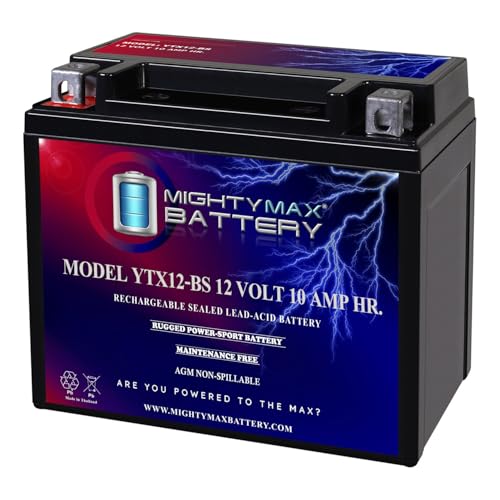 Mighty Max Battery YTX12-BS AGM Battery | Check price on Amazon | |
 Antigravity ATX12-RS Lithium Battery | Check price on Amazon | |
 KEMIMOTO Lithium Motorcycle Battery | Check price on Amazon |
Key takeaways
- Looking for the best battery for your Triumph Bonneville T100? Compare AGM and lithium YTX12-BS replacements that fit right, crank strong, and last.
A dead battery is the most common reason a Triumph Bonneville T100 refuses to start on a fine morning, and the fix is simple. The T100 uses the YTX12-BS, one of the most common motorcycle battery sizes in the world, so you have a wide choice of sealed AGM replacements and modern lithium upgrades that drop straight into the stock battery box.
As an Amazon Associate, we earn from qualifying purchases.
Quick Answer
The best battery for most Triumph Bonneville T100 riders is a sealed AGM battery in the YTX12-BS size, matching the stock fitment at 12 volts, 10 amp-hours, and 180 cold cranking amps. For the lightest option and strongest cranking, a lithium iron phosphate battery in the same case size is the upgrade pick.
How to Choose
The Bonneville T100 left the factory with a YTX12-BS battery, and that code tells you almost everything you need. YTX12-BS means a 12-volt battery about 150 mm long, 87 mm wide, and 130 mm tall, with the positive terminal on the left when viewed from the front. Any replacement carrying the YTX12-BS code, or listing the T100 in its fitment guide, should fit the stock battery box and connect to the stock cables without modification. Confirm the fitment for your exact model year before ordering: Triumph built the T100 in two generations, the air-cooled 865 cc bikes and the water-cooled 900 cc bikes that arrived for the 2016 model year.
Capacity is measured in amp-hours, and the stock figure is 10 amp-hours. Cold cranking amps, shortened to CCA, describe how much current the battery can deliver to turn the engine over on a cold morning. The stock AGM battery is rated at 180 CCA, which is enough for the T100 twin in normal conditions. Lithium batteries quote cranking power as cranking amps instead, and a lithium battery with 360 cranking amps spins the starter faster than the stock AGM unit.
The first real decision is chemistry. AGM stands for absorbed glass mat, the sealed lead-acid technology most T100s shipped with. AGM batteries are affordable, tolerant of the charging system on an older bike, and easy to live with. They arrive either factory activated and ready to install, or as a dry battery with an acid pack that you fill yourself before the first charge. A dry battery has a long shelf life, but you must fill it and charge it fully before fitting it. Once sealed, an AGM battery needs no topping up.
Lithium iron phosphate, shortened to LiFePO4, is the modern alternative. A lithium battery in a YTX12 case weighs roughly a third of the AGM equivalent, delivers stronger cranking, and holds its charge far longer when the bike is parked. The trade-offs are real: lithium batteries cost more up front, they need a charger with a lithium mode for bench charging, and their cranking power drops in very cold weather. They also need a built-in battery management system, called a BMS.
Terminal layout and weight deserve attention too. The T100 battery has the positive terminal on the left and the negative on the right, viewed from the front, and most YTX12-BS replacements follow this layout. Some lithium batteries offer terminals on both sides or a quad-terminal design, which is handy, but check that the cables will reach and that the terminals will not touch the seat base or the frame. A lithium battery saves around six pounds over an AGM unit, and warranty length is also worth comparing: AGM batteries typically carry a one-year warranty, while lithium batteries often carry a much longer warranty, sometimes five years.
Think about your charging setup before you buy. If you own a battery tender, check whether it has a lithium setting, because a standard lead-acid tender can damage a lithium battery. AGM batteries work with almost any motorcycle charger or tender, which is one reason they remain the default choice. If you ride year-round and park outside, an AGM battery is the safer bet in freezing weather. If you store the bike indoors over winter and ride in fair weather, lithium is hard to beat. Finally, measure before you buy if your bike has modifications, because aftermarket seats and tail tidies can eat into the space around the battery box.
Yuasa YTX12-BS AGM Battery
Yuasa is the name most riders reach for first, and for good reason. Yuasa supplies batteries to motorcycle makers around the world, and the YTX12-BS is the same maintenance-free AGM design that Triumph fitted to the T100 from the factory. This is the safe, known-quantity choice: the same size, the same terminal layout, the same 180 cold cranking amps, and the same sealed construction that needs no water after activation.
The Yuasa uses absorbed glass mat separators and an advanced lead-calcium alloy that holds its charge longer than older lead-antimony designs. It ships as a dry battery with an acid pack included, so you fill it yourself, let it soak, seal it with the supplied cap strip, and charge it before installation. Once filled and charged, it is sealed and maintenance free. Fitment covers the Bonneville T100 across the 2005 to 2026 model years, covering both the air-cooled 865 cc bikes and the water-cooled 900 cc bikes. On the bike, it delivers steady cranking and stable voltage for the fuel injection system. The drawbacks are weight, at a little over nine pounds, and the need to fill and charge it yourself.
Who Should Skip It
Skip the Yuasa if you do not want to fill a battery with acid and charge it before installation, or if you want the lightest possible battery for your T100.
Weize YTX12-BS AGM Battery
Weize has built a strong following among riders who want a sealed, factory-ready AGM battery at a sensible cost, and its YTX12-BS is a direct replacement for the Bonneville T100. The listing names the Bonneville T100, along with the Bonneville, Bonneville SE, Scrambler, Speed Triple, and Thruxton, in its motorcycle compatibility list, so fitment is explicit rather than assumed. This is the battery for riders who want to open the box, bolt it in, and ride.
The Weize is a sealed lead-acid battery with absorbed glass mat technology, rated at 12 volts and 10 amp-hours with 180 cold cranking amps. Those figures match the stock battery exactly. The case measures 5.91 by 3.43 by 5.12 inches, the stock YTX12-BS size, and the terminals are nut-and-bolt style with the positive on the left and the negative on the right. It arrives sealed and ready to install, with no acid pack to fill, which makes it a good choice for a roadside replacement or a Saturday-morning job. The 12-month warranty is standard for this class, and the main compromise is that it is a budget-focused AGM battery rather than the original equipment brand.
Specs
| Feature | Detail |
|---|---|
| Battery type | Sealed AGM, maintenance free |
| Voltage | 12 volts |
| Capacity | 10 amp-hours |
| Cold cranking amps | 180 CCA |
| Dimensions | 5.91 x 3.43 x 5.12 inches |
| Weight | About 7.9 pounds |
| Warranty | 12 months |
Who Should Skip It
Skip the Weize if you want the original equipment brand on your T100. Riders chasing the lightest setup or the longest warranty should look at the lithium options in this guide instead.
Mighty Max Battery YTX12-BS AGM Battery
Mighty Max is another well-known name in the replacement battery world, and its YTX12-BS is a straightforward sealed AGM battery that matches the T100 stock size and electrical figures. It is rated at 12 volts and 10 amp-hours with 180 cold cranking amps, and it measures 5.9 by 3.34 by 5.11 inches, the stock YTX12-BS footprint. If your T100 needs a fresh battery and you want a no-fuss replacement, this is a solid candidate.
The Mighty Max uses sealed lead-acid construction with absorbed glass mat separators, so it is spill-proof, maintenance free, and resistant to the vibration a parallel twin produces. It is factory activated, which means it arrives ready to install rather than as a dry battery with an acid pack. That is a real advantage if you are replacing a dead battery on a bike you want to ride the same day. At about seven and a half pounds, it is one of the lighter AGM batteries in this size. The battery is listed for a wide range of motorcycles and powersport machines, so double-check that the listing you order is the YTX12-BS size and that your T100 model year is covered.
Who Should Skip It
Skip the Mighty Max if you want the lightest battery available, the longest warranty, or the original equipment brand. Riders who store their T100 for months at a time may get more from a lithium battery.
Antigravity ATX12-RS Lithium Battery
The Antigravity ATX12-RS is the performance pick in this guide, and it changes the character of the T100 in a way no AGM battery can. It is a lithium iron phosphate battery in the standard YTX12 case size, so it drops into the stock battery box with no spacers and no modifications. Inside is a 6.1 amp-hour lithium pack with a lead-acid equivalent capacity of 12 amp-hours, delivering 360 cranking amps at a weight of just 2.65 pounds. That is roughly a third of the weight of the stock AGM battery, with twice the cranking power.
The headline feature is the RE-START system, a built-in jump-starting function. If you leave the lights on or the bike sits long enough to drain the battery, the battery management system puts the battery to sleep before it goes completely flat, keeping just enough energy in reserve to start the engine one more time. Pressing the restart button on the battery wakes it up, and the bike starts. The ATX12-RS is built around a full battery management system and UL-listed lithium cells, with protection against overcharge, over-discharge, and short circuits. The quad-terminal design lets you connect the cables from either side, and the battery is rated for five to eight years of service life. The trade-offs are cost, the need for a charger with a lithium setting, and weaker cranking in very cold weather. It is recommended for stock bikes up to 1200 cc, which comfortably covers the T100 in both its 865 cc and 900 cc forms.
Who Should Skip It
Skip the Antigravity if you ride through freezing winters and need reliable cold-morning starts, if you do not want to buy a lithium-compatible charger, or if the higher cost does not fit your budget.
KEMIMOTO Lithium Motorcycle Battery
The KEMIMOTO lithium battery is the budget-friendly way into lithium power for a T100, and it is worth considering if the Antigravity is more than you want to spend. This is a 12-volt lithium iron phosphate battery rated at 6 amp-hours, with a smart battery management system and a pre-charged design that is ready to install. The listing names the Bonneville T100 and the Bonneville T120 in its fitment list, and it lists the YTX12-BS among the lead-acid sizes it replaces, so the fitment is explicit.
Because this battery is physically smaller than a stock AGM battery, it ships with five universal-fit EVA spacers that let you pack it snugly into the T100 battery box. That is standard practice for lithium batteries in this class, and it takes only a few minutes during installation. The battery uses threaded lug terminals made from copper, which give a solid connection to the stock cables. The compromise is capacity: at 6 amp-hours, this battery has less reserve than the stock 10 amp-hour AGM unit, so it suits a T100 in good electrical health with no extra accessories drawing power while parked. For a fair-weather T100 that is ridden regularly and stored indoors, the KEMIMOTO is a practical and affordable lithium upgrade.
Who Should Skip It
Skip the KEMIMOTO if your T100 has extra electrical accessories, a weak charging system, or a habit of sitting for months without a tender, because its 6 amp-hour capacity leaves less reserve than the stock battery.
Who Should Skip It
A new battery is not always the answer. If your T100 cranks slowly because of corroded terminals, a loose earth connection, or a tired starter motor, a fresh battery will only mask the real fault for a short while. Clean the terminals, check the earth strap, and test the charging system before you spend money on a battery. A charging system that is not working properly will drain a new battery just as fast as it drained the old one.
Lithium batteries deserve a special note. If you ride through winter, park the bike outside in freezing weather, or rely on the bike as daily transport in a cold climate, an AGM battery is the safer choice. Lithium batteries lose cranking power in the cold and need a lithium-compatible charger. The same applies if you run heated grips, extra lights, or a phone charger that draws power while the bike is parked: a small-capacity lithium battery can run flat faster than a full-size AGM unit.
FAQ
What size battery does a Triumph Bonneville T100 take?
The Triumph Bonneville T100 takes a YTX12-BS battery, a 12-volt, 10 amp-hour sealed AGM battery measuring about 150 mm long, 87 mm wide, and 130 mm tall, with the positive terminal on the left. This size applies to both the air-cooled 865 cc models and the water-cooled 900 cc models. Always confirm your exact model year against the battery listing before ordering.
Can I use a lithium battery in my Bonneville T100?
Yes, you can use a lithium iron phosphate battery in a Bonneville T100, provided it is a YTX12-BS replacement with a built-in battery management system. Lithium batteries are lighter, crank harder, and hold their charge longer in storage than AGM batteries. You will need a charger with a lithium setting for bench charging, and you should expect weaker cranking on very cold mornings.
How long does a Bonneville T100 battery last?
A sealed AGM battery in a Bonneville T100 typically lasts three to five years with regular riding and sensible care, while a lithium battery can last five to eight years. Short trips, long storage without a tender, and a weak charging system all shorten battery life. Keeping the bike on a suitable tender during long breaks is the simplest way to get the most from any battery.
Do I need to charge a new T100 battery before installing it?
It depends on the battery type. A dry AGM battery that ships with an acid pack must be filled and fully charged before installation. A factory-activated AGM battery and a pre-charged lithium battery are ready to install, but giving any new battery a full charge on a suitable charger before the first ride is good practice.
Final Verdict
The best battery for a Triumph Bonneville T100 depends on how you ride, but the choice is simple once you know your priorities. For most riders, a sealed AGM battery in the YTX12-BS size is the right answer: it matches the stock fitment, works with any standard charger, and starts the bike reliably in all weather. The Yuasa is the original equipment choice, while the Weize and the Mighty Max offer the same size and the same electrical figures in a ready-to-fit package.
If you want the best performance the T100 battery box can hold, the Antigravity ATX12-RS is the clear upgrade. It is far lighter, cranks harder, lasts longer, and its built-in jump-starting feature is genuinely useful on a bike that sits between rides. The KEMIMOTO lithium battery is the affordable way to get most of those benefits at a lower cost, as long as you accept its smaller reserve capacity. Whichever you choose, match the YTX12-BS size, confirm the fitment for your model year, and keep the battery on a suitable tender when the bike is parked.
Product and ASIN Reference
| Product | ASIN |
|---|---|
| Yuasa YTX12-BS AGM Battery | B002EH8ZJK |
| Weize YTX12-BS AGM Battery | B07R3VX722 |
| Mighty Max Battery YTX12-BS AGM Battery | B00P2Q9J7C |
| Antigravity ATX12-RS Lithium Battery | B079VW9PVJ |
| KEMIMOTO Lithium Motorcycle Battery | B0D3DJJMF2 |