Key takeaways
- Two first focal plane rifle scopes in this budget tier, compared on magnification, reticle units, turrets and weight, with specs from Amazon listings.
Choosing a scope at the top of the mid-range is mostly a decision about how you plan to aim at distance. Holdover alone stops being enough once targets sit past a few hundred yards, and this is the tier where dialing turrets, first focal plane reticles and generous internal travel become normal equipment rather than luxuries. The two scopes below take that same brief in different units and different sizes, so the honest choice comes down to how you shoot, not which badge you prefer.

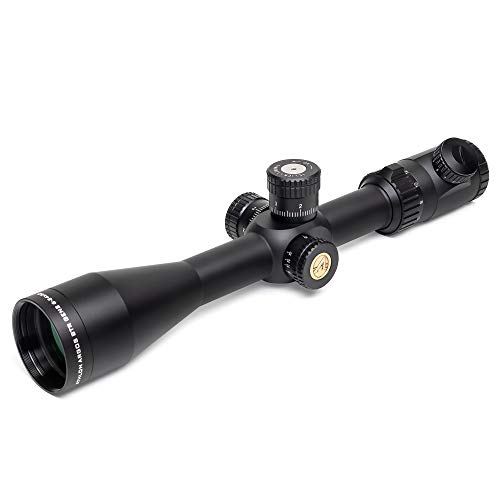
This guide is for steel, paper and varmint shooters who want one scope that can dial for distance on a centerfire or a precision rimfire, and for hunters who stretch practice far beyond hunting ranges. Both picks were chosen from their Amazon listing titles and specification data. One speaks MOA with a 56 mm objective, the other speaks MIL, weighs less and adds an illuminated reticle, and both keep their subtensions honest at any magnification.
Quick Picks
As an Amazon Associate we earn from qualifying purchases
| Product | Best for | Key spec from title |
|---|---|---|
| Vortex Venom 5-25×56 FFP EBR-7C (MOA) | Dialing for distance in MOA | 5-25×56, first focal plane |
| Athlon Argos BTR Gen2 6-24×50 APMR FFP IR MIL | MIL-based precision in a lighter scope | 6-24×50, illuminated APMR reticle |
How to Choose
Magnification range and objective size
Both scopes here zoom far past classic hunting ranges, topping out at 24x and 25x, and that reach is meant for small targets at long distance rather than for scanning timber. High magnification magnifies mirage and wobble along with the target, so most shooting happens in the middle of the range. Objective size matters at the other end of the day: a 56 mm lens gathers more light at dawn and dusk than a 50 mm lens, but it also demands taller rings and adds bulk above the bore line. Match the range to the smallest target you honestly shoot at, and let objective size follow your light conditions rather than fashion.
Focal plane and reticle units
A first focal plane reticle grows and shrinks with the image, so its hash marks measure the same at 8x as they do at 24x. That honesty is what makes holdover and dialing corrections transferable across the whole zoom range. The remaining choice is units. MOA and MIL both work; what matters is that your reticle, your turrets and your shooting partners all speak the same language. An illuminated center section also earns its keep against dark berms and shaded steel, where a fine black reticle can vanish at the wrong moment. Write your corrections in the same unit on your range card, and confusion between the two systems disappears.
Turrets, travel and zeroing hardware
A dialing scope lives or dies by its turrets. Clicks should feel positive and land where the markings promise, and there should be enough internal travel to reach your longest target without stacking holdover on top of a maxed-out dial. Hardware around the turrets matters just as much: a zero ring or zero stop lets you spin back to your baseline by feel, and a throw lever speeds up magnification changes between positions. Confirm the turret units match the reticle units before your first range session, not during it. A scope that returns to the same zero after a full rotation of the dial is worth more than one with a longer spec sheet.
Weight, eye relief and mounting
Neither scope here is light, yet the gap between them is real on a rifle that leaves the bench. One weighs 2.2 pounds, the other 30.3 ounces, and that difference shows up on long carries and in how a rifle balances off a pack. Eye relief around 3.6 inches suits most bolt guns, while hard-recoiling rifles deserve a little more room behind the ocular lens. Check ring height against the objective bell, confirm the tube length fits your rail or bases, and leave space for caps and a sunshade if you plan to use one. Balance the rifle on one hand at its midpoint once the scope is mounted; a nose-heavy setup tires quickly in field positions.
The 2 Best Options
Vortex Venom 5-25×56 FFP EBR-7C (MOA)
The Venom suits the shooter who dials in MOA and wants maximum reach from this tier. Its 5-25x range and 56 mm objective are aimed at small steel and varmints at distances where a hunting scope runs out of reference points, and the EBR-7C reticle keeps those points consistent at any zoom because it sits in the first focal plane. Vortex also packs the box with the small hardware dialing shooters actually use, including a throw lever and a RevStop zero ring, so the scope arrives ready for a turret-driven routine. Its 3.6 inches of eye relief suit typical bolt-action stocks during long prone strings.
Specs
- Magnification: 5-25x
- Objective lens diameter: 56 mm
- Focal plane: First
- Reticle: EBR-7C (MOA)
- Eye relief: 3.6 in (91.4 mm)
- Field of view: 21.2 ft at 100 yd at 5x
- Item weight: 2.2 lb
- Included components: Riflescope, 3-inch sunshade, turret tool, rubber lens covers, lens cloth, throw lever, 2 mm hex wrench, RevStop zero ring
- Part number: VEN-52501
- Warranty: Unlimited, unconditional lifetime warranty
Best for: MOA shooters dialing for steel and varmints at extended range.
Watch out for: At 2.2 lb with a 56 mm bell, it needs tall rings and suits a bench or prone rifle better than a carry gun.
Athlon Argos BTR Gen2 6-24×50 APMR FFP IR MIL
The Argos BTR Gen2 is the MIL counterpart in this pairing, built for shooters whose range cards, spotters and match habits already run in tenths of a milliradian. The APMR reticle sits in the first focal plane, so its measurements stay true from 6x to 24x, and illumination helps the fine center stand out against shaded steel and dark backstops. At 30.3 ounces it gives back some of the weight the big MOA scope adds, which makes it the easier of the two to live with on a rifle that moves between bench and field. At 14.1 inches long, it still leaves workable room on most rails.
Specs
- Magnification: 6-24x
- Objective lens diameter: 50 mm
- Focal plane: First
- Reticle: APMR FFP IR MIL (illuminated)
- Item weight: 30.3 oz
- Length: 14.1 in
- Part number: 214063
Best for: MIL-based precision shooting on rifles that still get carried.
Watch out for: The 50 mm objective gathers less light at last light than the 56 mm option here, and the fine illuminated reticle rewards a steady position.
Which One Fits Your Situation
Steel and paper at extended range
If your shooting is mostly prone or bench work on steel and paper past 400 yards, take the Venom. The 56 mm objective and 25x top end help you spot your own impacts and read mirage, the MOA turrets match the language most American range cards use, and the included throw lever and zero ring fit a stage-by-stage routine built around dialing. The heavier build also settles a light rifle on the bags.
Shooting in MIL with partners
Crews that call corrections in MIL should take the Argos. A shared unit removes translation errors between spotter and shooter, the illuminated APMR reticle stays visible on shaded targets, and the first focal plane layout keeps every call accurate no matter where the magnification ring sits when the correction arrives at the rifle. That consistency matters most on unknown-distance stages, where there is no time to convert units in your head.
A trainer that still gets carried
A precision rimfire or a light centerfire trainer that walks between the bench and the field is better served by the Argos. It is the lighter scope here by a clear margin, its 50 mm objective mounts lower on the rifle, and 6x at the bottom end keeps close targets and moving varmints workable without giving up dialing reach. It also balances more naturally on a lighter stock during long practice sessions.
Low-light varmint sessions
For varmints at dawn and dusk from a steady position, the Venom earns its bulk. The bigger objective keeps the image usable deeper into dim light, the wide magnification range handles both near lanes and far fence lines, and the included sunshade cuts glare when the sun sits low in front of you during evening sessions. On overcast mornings the same glass keeps targets readable well before full daylight.
Common Mistakes
- Mixing units: pairing an MOA reticle with MIL turrets, or calling corrections in one unit while dialing in the other, guarantees confusion at distance.
- Mounting a 56 mm objective on low rings and finding the bell touches the barrel; check ring height before the first range trip.
- Judging a dialing scope only by its top magnification, when turret repeatability and internal travel decide whether it works at range.
- Ignoring total weight on a rifle that gets carried; a heavy scope changes balance and handling more than most shooters expect.
- Skipping a tracking check after mounting; a tall-target exercise at the range confirms the clicks move the impact the amount they promise.
Frequently Asked Questions
Is a first focal plane reticle worth it at this level?
If you dial or hold for distance, yes. Subtensions stay accurate at every magnification, so a correction measured at 12x means the same thing at 24x. If all your shooting happens inside 200 yards at one magnification setting, a simpler second focal plane scope would serve you just as well for less money and less weight. Both scopes in this guide use that layout for exactly that reason.
Should I choose MOA or MIL?
Choose the unit your shooting partners and range cards already use, because shared language prevents conversion errors under time pressure. MIL suits shooters who think in tenths and metric distances, while MOA matches the quarter-minute clicks and inch-based habits common on American hunting rifles. Neither unit is more accurate; consistency is what matters most.
How much magnification do I really need?
For steel and varmints at extended range, a top end between 20x and 25x gives enough reach to read hits and mirage without living at maximum power. Most deliberate shooting happens between 10x and 18x, where the image stays bright and the field of view stays workable. Buy the range for its middle, not its ceiling.
Does a 56 mm objective need special rings?
It needs taller rings than a 40 or 50 mm objective, and the exact height depends on your barrel profile and rail. Leave clearance for the bell and for lens caps, and confirm the scope can still sit far enough back for a natural cheek weld. A one-piece mount solves the spacing question on many rail-equipped rifles.