Our Short List of 3
All 4 Picks at a Glance
| Product | Specs | Action |
|---|---|---|
 1. Melnor XT Turbo Oscillating Sprinkler (65154AMZ) | Check price on Amazon | |
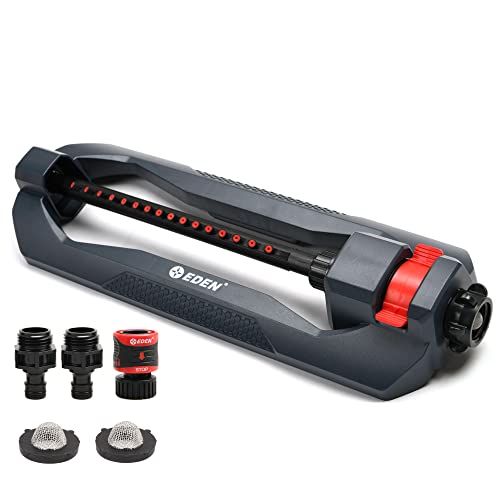 2. Eden 96213 Essential Turbo Oscillating Sprinkler | Check price on Amazon | |
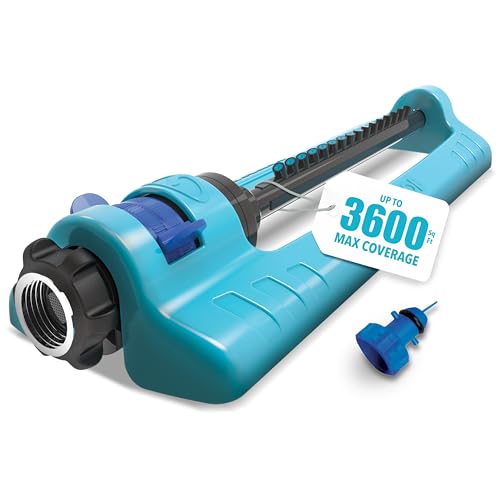 3. Aqua Joe SJI-OMS16 Oscillating Sprinkler | Check price on Amazon | |
 4. Rain Bird 25PJDAC Brass Impact Sprinkler | Check price on Amazon |
Key takeaways
- Find the best sprinklers for new lawn care: gentle, even coverage for fresh seed and sod, with adjustable range, sturdy bases, and a simple hose setup.
A new lawn is thirsty in a way an established lawn is not. Fresh seed and new sod both sit close to the surface, and their roots have not yet grown down into soil that holds moisture. That means the best sprinklers for new lawn care are not the ones that throw the most water the farthest. They are the ones that lay down a soft, even layer of water, keep the top layer of soil damp without washing seed away, and let you aim the spray exactly where the new grass is growing.
Water too hard and seed moves, puddles form, and bare patches appear. Water too lightly and the seed dries out between sessions, which stalls germination. The right sprinkler sits in the middle: gentle droplets, steady coverage from edge to edge, and controls that let you narrow the pattern to a strip of fresh seed or widen it across a full yard. The four sprinklers below all fit that job, and each one suits a slightly different lawn shape, size, and watering routine.
What to Look For When Watering a New Lawn
Gentle, Even Coverage
New seed needs moisture, not force. An oscillating sprinkler sends out a fan of fine droplets that land softly, which is exactly what a freshly seeded bed needs. A heavy, pounding stream can displace seed and carve small channels in bare soil, so look for a sprinkler whose spray reads as a light rain rather than a jet. Evenness matters just as much as gentleness. Dry strips between passes are a common cause of patchy germination, so a sprinkler with many nozzles spread across a wide bar tends to wet the ground more uniformly than one with a few nozzles clustered together.
Adjustable Range and Width
A new lawn is rarely a perfect rectangle, and the seeded area often changes as a project progresses. One week you may be watering a narrow strip along a path, the next a full back yard. Range and width controls let one sprinkler handle both. Sliding tabs or dials that narrow the spray keep water off driveways, patios, and garden beds, while a full-width setting covers open ground. Flow control on the unit itself is also useful, since it lets you soften the spray without walking back to the faucet every time you want a lighter touch on a delicate patch.
Coverage Area
Match the sprinkler to the size of the area you are watering. A sprinkler built for 4,500 square feet can cover a large yard in one position, but it may be awkward on a small front lawn where most of the spray would land on the sidewalk. A smaller unit may need to be moved two or three times to cover the same ground, which is fine if you are home to move it, but less convenient if you water in the morning before leaving the house. Measure the seeded area first, then pick a sprinkler whose coverage fits it with a little room to spare.
A Stable Base
A sprinkler that tips over mid-session leaves one corner soaked and the rest dry. New lawns are often watered on soft, freshly graded soil, so a weighted or metal base holds its position better than a light plastic sled on uneven ground. A tripod base lifts the spray above young grass and low edging, which helps the pattern reach farther, while a low sled base stays put in wind and keeps the spray close to the soil. Either style works well as long as the base is heavy enough for the water pressure you use.
Hose Connection and Flow Control
A standard garden hose connection with a quick-connect fitting saves time when you move the sprinkler between positions, which you will do often on a new lawn. Look for a metal hose fitting rather than a plastic one if you plan to connect and disconnect the hose every day, since metal threads hold up better to repeated use. A built-in filter screen is a small extra that helps when your water carries sediment, because a clogged nozzle is one of the most common reasons a sprinkler starts watering unevenly.
How Much Water a New Lawn Needs
Seed and sod both need the top inch or so of soil to stay damp until roots take hold, which usually means short, frequent watering sessions rather than one long soak. Many lawn care guides suggest watering new seed two to four times a day for short periods in the first couple of weeks, then cutting back as the grass grows and roots deepen. A sprinkler that is easy to move and quick to aim makes that routine far easier to keep up. Once the new grass has rooted firmly enough that you cannot lift a corner of sod or tug a seedling loose, you can shift toward deeper, less frequent watering that encourages roots to grow down.
Top Picks
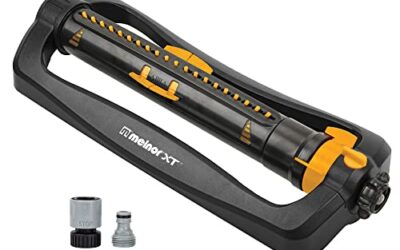
1. Melnor XT Turbo Oscillating Sprinkler (65154AMZ)
The Melnor XT Turbo is the most adjustable oscillating sprinkler in this guide, and that flexibility is why it leads the list. Its 20 precision nozzles spread water across up to 4,500 square feet, and the Zoom Control lets you narrow the range to a small patch of newly seeded lawn or open it up to cover a large section of the yard. Width and range adjust independently on each side, so you can shape the pattern around a path, a flower bed, or the edge of a driveway without moving the sprinkler itself.
A dirt-resistant drive keeps the oscillating motion smooth even with well water, and the metal sled base stays planted on soft, freshly graded soil. The Quick Connect bundle in the listing makes it fast to attach and detach a standard garden hose, which matters when you are moving the sprinkler between positions several times a day during the first weeks after seeding. Flow control on the unit lets you soften the spray for the most delicate patches of seed without walking back to the faucet.
This is the pick for a large new lawn, or for a yard where the seeded area is an irregular shape. The wide coverage means fewer moves per session, and the independent left and right adjustments mean you can keep water exactly where the new grass is. If your lawn is small, the same controls let you shrink the pattern down, so the sprinkler stays useful long after the lawn is established.
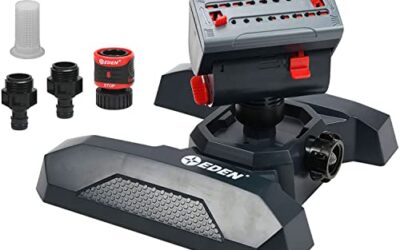
2. Eden 96213 Essential Turbo Oscillating Sprinkler
The Eden 96213 covers up to 3,600 square feet with 16 precision nozzles, and its weighted base is the feature that stands out for new lawns. Freshly graded soil is soft and uneven, and a light sprinkler can tip or creep as it runs. The weighted base on the Eden holds its position, so the spray pattern stays where you aimed it for the whole session. A turbo drive motor keeps the oscillation steady, and the range slides let you shorten the throw to match a narrow seeded strip.
The listing includes a Quick Connect bundle with a shut-off fitting, plus stainless steel filter screens that help keep sediment out of the nozzles. The adjustable range control works with the width tabs, so you can water a rectangle of new seed without soaking the sidewalk beside it. The body is compact enough to carry with one hand, which makes the daily routine of moving the sprinkler from one section to the next a simple task.
This is a strong match for a medium-sized new lawn where stability matters. If your soil is freshly tilled or your yard slopes gently, the weighted base earns its place. The 3,600 square foot coverage handles most suburban front or back lawns in one or two positions, and the nozzle count is high enough to lay down an even layer of water across the full pattern.
3. Aqua Joe SJI-OMS16 Oscillating Sprinkler
The Aqua Joe SJI-OMS16 is built around a solid metal base, and that construction is the reason it belongs on this list. New lawns are watered daily, often for weeks, and a sprinkler that gets dragged across the yard, bumped by a hose, and left out in the sun needs to hold up. The metal base resists tipping and gives the unit a planted feel on soft ground, while the 16 clog-resistant nozzles deliver a fan of water across up to 3,600 square feet, with a listed spray distance of up to 70 feet and a width of up to 37.8 feet.
Adjustable spray controls let you change the range and width to fit the seeded area, and an integrated cleaning pin is stored on the unit for clearing a nozzle that gets blocked. That is a practical touch for new lawns, because even a single clogged nozzle can leave a dry stripe where seed fails to germinate. The sprinkler connects to a standard garden hose and the metal fitting at the inlet is made for repeated connection and disconnection.
Pick the Aqua Joe if you want a sprinkler that can take daily use through a full seeding season and beyond. The metal base suits yards where the sprinkler gets moved often, and the cleaning pin helps you keep the spray pattern even without any extra tools. For a medium lawn with a straightforward rectangular shape, it covers the ground in one or two positions and keeps the routine simple.
4. Rain Bird 25PJDAC Brass Impact Sprinkler
The Rain Bird 25PJDAC is the impact sprinkler in this guide, and it suits a different watering style from the oscillating picks above. Its brass, bronze, and stainless steel head throws a single rotating stream in an adjustable pattern from 20 degrees to a full 360 degrees, with a spray radius of 20 to 41 feet. That long throw covers a large new lawn from one position, and the impact mechanism is a proven design that handles higher water pressure without losing its pattern.
Note that this listing is for the sprinkler head itself, so it needs a compatible base, spike, or riser to stand in the yard. A step spike or a tripod base pairs with it, and a tripod lifts the spray above young grass so the stream clears low edging and reaches the far side of a wide lawn. Once mounted, the pattern adjustment lets you water a part circle along a fence line or a full circle in the middle of open ground, which is handy when only part of the yard has been seeded.
Choose the Rain Bird if your new lawn is large and open, or if you already have a spike or tripod base and want a durable head that will last for years. The brass construction resists wear from sun and water, and the long radius means fewer moves across a big area. For small or narrow seeded strips, one of the oscillating picks above gives finer control, but for broad coverage the impact pattern is hard to beat.
Comparison at a Glance
| Sprinkler | Type | Coverage | Spray Control | Base |
|---|---|---|---|---|
| Melnor XT Turbo (65154AMZ) | Oscillating | Up to 4,500 sq. ft. | 20 nozzles, independent left and right range, Zoom Control | Metal sled |
| Eden 96213 | Oscillating | Up to 3,600 sq. ft. | 16 nozzles, adjustable range and width | Weighted base |
| Aqua Joe SJI-OMS16 | Oscillating | Up to 3,600 sq. ft. | 16 clog-resistant nozzles, adjustable spray, cleaning pin | Metal base |
| Rain Bird 25PJDAC | Impact head | 20 to 41 ft. radius | Adjustable 20 to 360 degree pattern | Head only, needs base or riser |
Frequently Asked Questions
How often should I water a new lawn?
Fresh seed and new sod need the top layer of soil to stay damp, so short sessions two to four times a day are a common starting point in the first two weeks. The exact schedule depends on heat, wind, and soil type: sandy soil dries faster than clay, and a hot afternoon dries the surface faster than a cool morning. Watch the soil rather than the clock. If the surface looks dry and pale by midday, add a session. As the grass roots and thickens, stretch the gap between sessions and water more deeply each time.
How long should each watering session last?
A light session of 10 to 20 minutes per position is enough for most oscillating sprinklers on fresh seed, since the goal is to dampen the top inch of soil without creating puddles. If water starts pooling or running off, stop the session and let it soak in before running the sprinkler again. On a slope, two shorter sessions with a pause between them usually wet the ground better than one long session. Once the lawn is established, longer and less frequent watering encourages deeper roots.
Is an oscillating sprinkler or an impact sprinkler better for new seed?
An oscillating sprinkler is usually the safer choice for fresh seed because it lays down a soft fan of droplets that is less likely to move seed around. Its rectangular pattern also fits the shape of most lawns. An impact sprinkler throws water farther and covers a large open area from one position, which suits a big new lawn, but its stream is stronger, so it works best once seed has started to root or when it is mounted high enough that the stream lands gently. Many homeowners start with an oscillating sprinkler and add an impact sprinkler later for broad coverage.
Do I need to move the sprinkler during a session?
Yes, unless the sprinkler covers the whole seeded area from one spot. Check the edges of the pattern after a few minutes to make sure the spray reaches the far corners without overshooting onto paths or driveways. Overlapping each position slightly avoids dry stripes where two patterns meet. A sprinkler with range and width controls makes this easier, since you can adjust the pattern at each position instead of hunting for the perfect spot to set it down.
Conclusion
A new lawn rewards gentle, even watering, and the right sprinkler makes that routine easy to keep up for the weeks it takes seed to germinate and sod to root. The Melnor XT Turbo leads for large or irregular lawns thanks to its wide coverage and independent range controls, the Eden 96213 holds steady on soft soil with its weighted base, the Aqua Joe SJI-OMS16 brings a durable metal base and a handy cleaning pin to daily watering, and the Rain Bird 25PJDAC covers big open ground with a long-throwing impact pattern once it is paired with a base or riser. Measure your seeded area, pick the sprinkler whose pattern fits it, and keep the top layer of soil damp until the new grass is firmly rooted.
Disclosure: As an Amazon Associate, pvabuy.co earns from qualifying purchases.