Key takeaways
- Compare the best dressmaker shears for fabric cutting, from forged Gingher and Kai picks to Fiskars and LIVINGO tailor scissors for home sewing.
Dressmaker shears are the cutting tool a sewing kit is built around. Unlike general-purpose scissors, they pair long blades with a bent handle, so the lower blade rides flat along the cutting table while the fabric stays put. That geometry is what produces long, straight pattern cuts instead of the jagged, lifted edges you get from ordinary craft scissors. A good pair also carries enough blade weight and edge hardness to slice through several layers of cloth in one pass, all the way to the tip.
The five shears below cover the main ways buyers approach this purchase. There is a forged, all-metal classic from Gingher, two Japanese Kai models at different levels, a lightweight SoftGrip option from Fiskars, and a long, titanium-coated budget pick from LIVINGO. Each entry lists the specs that can be confirmed from the manufacturer’s listing, followed by a plain statement of who the pair suits and who should look elsewhere.
As an Amazon Associate, we earn from qualifying purchases.
How to Choose Dressmaker Shears
Length. Most dressmaker shears run 8 to 10 inches overall. An 8-inch pair is easier to control for garment pieces, curves, and shorter cuts. A 9- or 10-inch pair covers more ground per stroke, which helps when cutting long pattern pieces, yardage, or quilting panels, but the extra length adds weight and can feel clumsy on detailed work.
Blade construction. Forged shears are made from a single piece of steel that is shaped, tempered, and ground. They tend to be heavier, hold an edge well, and can usually be resharpened many times. Stamped or assembled shears with stainless blades are lighter and resist rust, but the edge profile and pivot quality vary more between brands. High-carbon stainless blends, like the steel in Kai’s professional line, aim for hardness and corrosion resistance at once.
Edge type. A knife edge is the standard for dressmaker shears: one blade is ground to a fine, sharp edge that shears cleanly through woven fabrics. Serrated or micro-serrated edges grip slippery fabrics such as silk, chiffon, and satin so the cloth does not slide ahead of the cut. If you mostly cut cottons, linens, and denim, a plain knife edge is the simpler and more versatile choice.
Handle shape and comfort. The bent (offset) handle is the defining feature of dressmaker shears: it keeps your hand above the table while the blade stays flat. Beyond that, all-metal handles are durable but cold and heavy, while molded SoftGrip-style handles reduce fatigue during long cutting sessions. Handedness matters too, because true left-handed shears reverse the blade order; a right-handed pair used in the left hand pushes the blades apart instead of together.
Care. Fabric shears should cut fabric only. Paper, cardboard, and craft materials dull the edge quickly. Wipe the blades after use, keep the pivot clean, and store the shears in a sheath so the tips are protected. Forged and high-carbon blades reward occasional professional sharpening; inexpensive coated blades are usually replaced rather than serviced.
Gingher 8-Inch Knife Edge Dressmaker’s Shears

The Gingher 8-inch is the traditional benchmark in this category. It is a fully forged pair with long, precision-ground knife-edge blades and a bent handle, finished in chrome-plated nickel. The listing notes that the blades cut through multiple layers of fabric all the way to the tip, which is exactly the behavior garment sewers need when cutting out pattern pieces. A protective sheath is included for storage.
Because the handles are metal rather than molded plastic, the pair has a solid, weighty feel at just under half a pound. That heft helps the blades power through cloth, though it also means the shears ask more of your hand over a long session than the lighter options in this guide. The model number for this listing is 01-005288.
Specs
- Overall length: 8 inches
- Model: 01-005288
- Construction: forged steel
- Blade edge: knife edge, precision ground
- Handle: bent handle, chrome-plated nickel finish
- Included: protective sheath
- Weight: 0.38 lb
Who it’s for: Sewers who want one durable, resharpenable pair of classic forged shears for garment work and general fabric cutting.
Who should skip: Anyone who finds all-metal handles tiring, or who mainly cuts slippery silks and would be better served by a serrated edge.
Kai 5210 8-Inch Dressmaking Shears (N5210)

The Kai 5210 is the entry point into Kai’s dressmaking line. It is an 8-inch pair with a bent handle and hardened stainless steel blades, and at roughly a third of a pound it is noticeably lighter than the forged Gingher above. That lighter build makes it a comfortable everyday pair for dressmaking, quilting, and craft sewing where the cutting sessions are long but the fabrics are light to medium weight.
Kai’s design keeps the profile slim, so the shears handle curves and notches without the bulk of a professional model. The listing identifies this pair by model N5210. For sewers who like the Kai feel but need more cutting power for thick or layered fabric, the 7230 below is the step up within the same brand family.
Specs
- Overall length: 8 inches
- Model: N5210
- Blade material: hardened stainless steel
- Handle: bent handle
- Weight: 0.31 lb
- Blade edge: not stated
- Country of origin: not stated
Who it’s for: Home sewers and quilters who want a light, well-balanced 8-inch pair for everyday fabric cutting.
Who should skip: Anyone regularly cutting many layers of denim, canvas, or upholstery fabric, where the heavier professional Kai or a forged pair is a better match.
Kai 7230 9-Inch Professional Shears

The Kai 7230 belongs to Kai’s 7000 professional series and is built for thicker, more demanding fabrics. The blades are high-carbon hardened stainless steel, a harder blend than the standard 5000-series steel, intended to hold its edge through heavy use on materials like denim and heavyweight knits. At 9 inches overall, it also takes a longer bite per stroke than the 8-inch pairs, which speeds up cutting long pattern pieces.
Despite the professional build, the 7230 keeps a slim-line profile, and its listed weight of 0.44 lb is reasonable for a 9-inch pair. The cutting length is about 3.4 inches. This is the pair in the guide aimed at serious sewists who cut demanding fabric often and want a blade that stays sharp longer between sharpenings.
Specs
- Overall length: 9 inches
- Model: KAI7230 (N7230)
- Blade material: high-carbon hardened stainless steel
- Cutting length: about 3.4 inches
- Series: 7000 Professional
- Weight: 0.44 lb
- Handle: bent handle, slim-line profile
Who it’s for: Serious sewists and tailors who regularly cut thick or layered fabrics and want a professional-grade edge.
Who should skip: Beginners who only cut light cotton occasionally; the 5210 or the Fiskars below covers that use at a simpler level.
Fiskars RazorEdge Fabric Scissors, 8 Inch

The Fiskars RazorEdge is the comfort-first option here. Its premium stainless steel blades are ground to the line’s RazorEdge profile for clean cuts to the tip, and the handle is a molded SoftGrip design with a rubber grip surface instead of bare metal. At about 0.12 kg, it is the lightest pair in this guide by a wide margin, which makes it easy on the hand during long sessions of cutting pattern pieces.
The trade-off is construction: this is a lighter, assembled pair rather than a forged one, so it is aimed at light and medium fabrics rather than heavy layer stacks. The listing identifies it as model 181850 in the white and orange colorway. For many home sewers, that balance of a sharp factory edge and an easy grip is the practical sweet spot.
Specs
- Overall length: 8 inches
- Model: 181850
- Blade material: premium stainless steel, RazorEdge profile
- Handle: SoftGrip ergonomic handle, rubber grip
- Weight: 0.12 kg
- Color: white and orange
- Edge type: smooth knife edge
Who it’s for: Home sewers who cut light to medium fabrics and put comfort and low weight first.
Who should skip: Anyone cutting heavy denim, canvas, or many layers at once, or who wants a forged pair that can be resharpened for decades.
LIVINGO Premium Tailor Scissors, 9.5 Inch
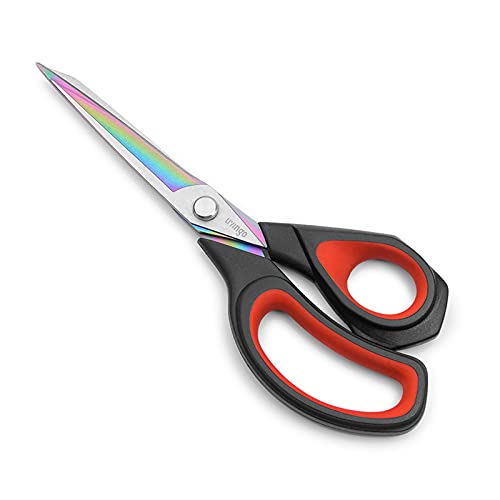
The LIVINGO is the long-reach budget pick. At 9.5 inches overall with a 4-inch blade, it covers long pattern runs in fewer strokes, and the forged stainless steel blades carry a titanium coating that the listing associates with edge durability and rust resistance. The comfort-grip handles are finished in black and red, and the pair weighs about 152 grams, which is light for its size.
The listing, model H1B, positions these as multi-purpose tailor scissors for fabric, leather, and crafting. As with most coated budget blades, the long-term question is how the edge holds up and whether resharpening is worthwhile; the listing does not state a sharpening service or warranty detail, so those points are marked not stated here. For occasional dressmaking and general craft cutting, the size and blade length are the draw.
Specs
- Overall length: 9.5 inches
- Model: H1B
- Blade material: forged stainless steel with titanium coating
- Blade length: 4 inches
- Weight: 152 g
- Handle: comfort grip, black and red
- Sharpening guidance: not stated
Who it’s for: Budget-minded sewers and crafters who want a long 9.5-inch pair for fabric and light leather work.
Who should skip: Professionals who need a documented service path and a proven track record; the Kai 7230 or the Gingher is the safer long-term tool.
FAQ
What is the difference between dressmaker shears and regular scissors?
Dressmaker shears have longer blades and a bent handle, so the lower blade slides flat along the table and the fabric is not lifted during the cut. Regular scissors have straight, aligned handles and shorter blades, which suits paper and general tasks but distorts fabric cuts.
Should I choose 8-inch or 9-inch shears?
Choose 8-inch shears for garment pieces, curves, and general sewing, where control matters most. Choose 9-inch or longer shears when you cut long pattern pieces or yardage often, since each stroke covers more material. Hand size and strength matter too: a longer pair you cannot control comfortably will cut worse than a shorter pair you can.
Can dressmaker shears cut paper in a pinch?
They physically can, but it is a bad habit. Paper fibers and fillers dull a fabric edge quickly, and a dulled pair starts chewing fabric instead of slicing it. Keep a separate inexpensive pair of scissors for paper, patterns printed on heavy stock, and craft materials.
How do I keep shears sharp and working well?
Cut only fabric, wipe the blades clean after use, and store the shears in a sheath so the tips and edges are protected. Keep the pivot free of lint. When a forged or high-carbon pair eventually dulls, a professional sharpening service can restore the factory edge angle far more reliably than home sharpeners.
Final Verdict
For a single pair that will handle most garment sewing for years, the Gingher 8-inch knife edge is the classic forged choice, and the Kai 5210 matches it in size with a lighter stainless build for everyday comfort. Step up to the Kai 7230 if thick or layered fabric is your normal workload. The Fiskars RazorEdge is the easiest pair to live with for light fabrics and long sessions, while the LIVINGO 9.5-inch offers the longest reach in the group for buyers on a budget. Match the pair to the fabric you actually cut, and any of the five will outperform a general-purpose scissor at the cutting table.
Product and ASIN Reference
| Product | ASIN |
|---|---|
| Gingher 8-Inch Knife Edge Dressmaker’s Shears | B000UU6SR4 |
| Kai 5210 8-Inch Dressmaking Shears (N5210) | B004MN72VG |
| Kai 7230 9-Inch Professional Shears | B00944D5OG |
| Fiskars RazorEdge Fabric Scissors, 8 Inch | B0DG4VVPKZ |
| LIVINGO Premium Tailor Scissors, 9.5 Inch | B079L16LN6 |