Key takeaways
- Compare the best flux pens for soldering and circuit repairs — no-clean, rosin, and lead-free pens with precise tips for clean joints on every board.
A flux pen puts a thin, controlled line of flux exactly where the joint will be, and that small difference changes how solder behaves. Without flux, solder beads up and sits on oxidized copper instead of wetting it. With the right pen, the same joint flows in a second, the fillet turns bright and concave, and the board stays clean enough to inspect. The five pens below cover what matters for bench work: low-solids no-clean, rosin, and a budget multi-pack for spares. Each one is a genuine pen applicator, not a syringe or a jar.
As an Amazon Associate, we earn from qualifying purchases.
Quick Answer
For most bench work, the Kester 951 is the all-round pick: a low-solids no-clean pen that leaves almost no residue. If you solder daily, the refillable SRA 312 costs less per job. Rosin fans working on oxidized joints should look at the MG Chemicals 835-P, and the Outus three-pack is the way to keep a spare pen at the bench and one in the field kit.
1. Kester 951 Flux-Pen: The No-Clean Standard

The Kester 951 is the pen other pens get measured against. Kester has made soldering consumables for more than a century, and the 951 formula shows up in repair guides and on professional benches. It is a halogen-free, non-rosin flux with only 2.0 percent solids, so the residue it leaves behind is practically invisible and does not need removal in most applications. That matters when the joint sits under a connector or inside a tight enclosure where cleaning is difficult.
The pen holds 10 milliliters of flux behind a pressure-sensitive felt tip. Press the tip against the pad and the valve opens just enough to wet the surface; lift it and the flow stops. That control is what separates a pen from a bottle, and drag soldering a fine-pitch chip is a matter of drawing one thin line across the pins, then running the iron down the row.
Kester classifies the 951 as ORL0 under J-STD-004, which means low activity and no halides. It suits leaded and lead-free alloys alike, and the residue is non-conductive and non-corrosive. Two limits deserve respect: the pen is flammable, so it lives away from the iron, and the shelf life is one year at 10 to 25 degrees Celsius.
Specs
- Brand Kester; Model 83-1000-0951; Flux type low-solids no-clean, halogen-free, non-rosin; Classification ORL0 per J-STD-004; Volume 10 mL (0.33 fl oz); Solids 2.0 percent; Tip pressure-sensitive felt; Shelf life 1 year at 10 to 25 degrees Celsius; Suits leaded and lead-free alloys; ASIN: B004X4KOWS
2. SRA 312 Soldering Flux Pen: The Refillable Workhorse

The SRA 312 earns its place by solving the one annoyance every flux pen owner knows: a pen that runs dry halfway through a repair session. This one is refillable, so the barrel can be topped up from a bottle of low-solids no-clean flux instead of going in the bin. For anyone who solders several boards a week, that single feature changes the running cost of the whole bench.
Inside the pen is the same chemistry as the Kester 951: a low-solids, no-clean flux that leaves minimal residue. The 10-milliliter barrel matches the Kester on volume, and the felt tip lays down the same thin, even film. The SRA tip needs a firm press to open, which makes it slightly slower to prime on a cold pen but also harder to flood by accident, and on a dense board that restraint is a virtue.
SRA lists the pen under part number PEN-NC, and the listing ships from Amazon with SRA Soldering Products as the seller. That direct seller line is worth noting because flux pens attract lookalike listings. The refillable design also suits a shared bench, where one pen can stay at the rework station while a second lives in the field kit.
Specs
- Brand SRA Soldering Products; Model 312, part number PEN-NC; Flux type low-solids no-clean; Volume 10 mL; Tip felt, refillable barrel; Residue minimal, no cleaning required in most applications; Suits leaded and lead-free alloys; ASIN: B008OC0E5M
3. Chemtronics CircuitWorks CW8100: The Compact No-Clean Pen

The Chemtronics CircuitWorks CW8100 is the smallest pen in this guide at 9 grams of flux, and that small size is a deliberate choice. It is a dispensing pen built for precision work on single joints, not for flooding a whole board. The tip delivers a narrow bead of no-clean flux exactly onto a pad or a pin, which suits touch-up work, single-component replacement, and repairs where the rest of the board must stay untouched.
Chemtronics formulates the CW8100 as a patented, halide-free, organic low-solids no-clean flux. It meets MIL-F-14256 E and F and carries a NATO stock number, so it was designed for field repair kits where reliability matters more than volume. The flux is non-corrosive, and the residue it leaves is thin enough to leave in place on most assemblies.
The 9-gram fill runs out faster than the 10-milliliter pens in this guide, so the CW8100 suits occasional repair work rather than daily production. It suits a field kit better than a production bench, and the refillable SRA 312 is the better pick for daily use. Confirm the model on the barrel before ordering: Chemtronics sells rosin and water-soluble CircuitWorks pens that look alike.
Specs
- Brand Chemtronics CircuitWorks; Model CW8100; Flux type no-clean, halide-free, organic low-solids; Volume 9 g (0.32 oz); Tip dispensing pen; Standards MIL-F-14256 E and F; NATO stock number 6850-01-475-0987; Residue thin, non-corrosive; ASIN: B000LBA7PG
4. MG Chemicals 835-P Rosin Flux Pen: The Strongest Bite

Rosin flux exists for one reason: oxidized metal. When a joint has sat in a drawer for years, or a salvaged board carries dull, gray pads, a gentle no-clean flux sometimes cannot cut through the oxide layer fast enough. The MG Chemicals 835-P is the pen for that job. It carries a type R rosin-activated flux built on pure white-water gum rosin, with a moderate activity level that wets tarnished copper quickly.
The 835-P is a 10-milliliter pen with a chiseled felt tip. The chisel tip lays a wider stripe across a row of pins, while its corner reaches a single tight pad. MG classifies the flux as ROM1 under J-STD-004, with 50 percent solids and a light amber color. That high solids content is its one real demand: the residue is sticky and should be cleaned off with a flux remover such as MG 4140 or 413B after the work is done.
Shelf life is generous at three years from the date of manufacture, stored between 18 and 27 degrees Celsius. The flash point is low at 12 degrees Celsius, so keep the cap on when not in use and the pen away from the iron. The 835-P suits repair work on vintage equipment and salvaged boards.
Specs
- Brand MG Chemicals; Model 835-P; Flux type rosin-activated, type R; Classification ROM1 per J-STD-004; Volume 10 mL (0.33 fl oz); Solids 50 percent; Tip chiseled felt; Color light amber; Shelf life 3 years at 18 to 27 degrees Celsius; Flash point 12 degrees Celsius; Cleaning recommended with MG 4140 or 413B; ASIN: B0080X79HG
5. Outus 3-Piece No-Clean Rosin Flux Pen Set: The Budget Multi-Pack
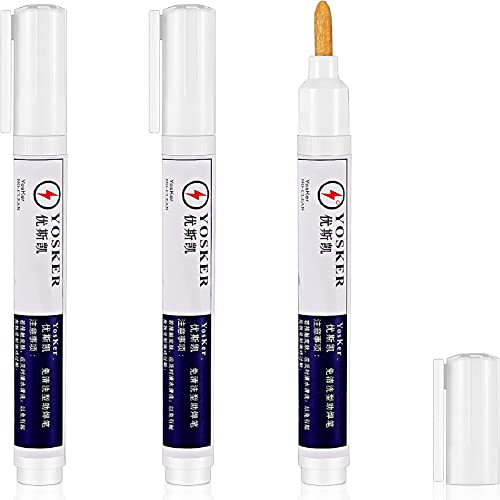
The Outus set is the value pick in this guide: three no-clean rosin flux pens in one pack, sold under part number Outus-3442. The point of a multi-pack is simple. One pen stays at the bench, one lives in the field kit, and one waits as a spare. The pens are marker-style applicators for electronics tabbing wire soldering and PCB board maintenance, laying a thin line of rosin flux exactly where the joint will be.
Rosin flux bites harder than the low-solids no-clean pens above, so pair this set with a gentle no-clean pen. Use the Outus pens on dull wire, tarnished pads, and tabbing wire joints, and keep a no-clean pen for fresh boards. The listing carries little specification detail beyond the pack contents, and it gives no tip shape, so do not expect the chiseled tip of the MG pens.
One flag belongs on this pick. The newest confirmation is a roundup listing this set as a live Amazon pick two days before writing, while the Amazon crawl text naming the product and part number is 226 days old. Confirm the listing is live and the part number reads Outus-3442 before ordering.
Specs
- Brand Outus; Part number Outus-3442; Pack 3 pens; Flux type no-clean rosin; Use electronics tabbing wire soldering, PCB board maintenance; Pack weight 2.08 oz; Pack size 6.3 x 3.19 x 0.55 in; ASIN: B0953NGKXR
How to Choose a Flux Pen
Flux chemistry decides most of the choice. No-clean flux, like the Kester 951, the SRA 312, the Chemtronics CW8100, and the Outus set, leaves so little residue that cleaning is optional. Rosin flux, like the MG 835-P, cleans oxide harder but leaves a sticky residue that should be removed.
Match the pen to the metal in front of you. Fresh boards with bright plating need only a gentle no-clean pen. Old boards, salvaged parts, and dull wire need the stronger bite of rosin. Lead-free solder needs a flux that stays active at higher temperatures, and both the Kester 951 and the SRA 312 suit lead-free alloys. Keep two pens on hand when the bench mixes metals: a no-clean pen for everyday joints and a rosin pen for the stubborn ones.
Tip shape and volume decide the rest. A chiseled tip covers a row of pins in one stroke, while a fine round tip suits a single pad. Ten milliliters is the standard pen size. A refillable pen pays for itself on a busy bench, a small 9-gram pen suits a field kit, and a three-pack keeps spares ready. Store pens upright with the cap on, away from the iron and away from sunlight.
Who Should Skip Flux Pens
Flux pens are not for everyone. If the only soldering on the bench is an occasional wire splice, the flux core inside ordinary solder wire already carries enough flux for the job, and a pen adds little. The same applies to plumbing and stained glass work, where the flux chemistry is entirely different and an electronics pen is the wrong tool.
Anyone working on a board that will be conformally coated should also pause. Coating sticks poorly to flux residue, even no-clean residue, so the board needs a full cleaning step before coating. A pen is also the wrong applicator for large jobs: flooding a whole board calls for a bottle or a brush, not a pen. Pens exist for precision: one joint, one row, one component at a time.
Frequently Asked Questions
Do I need to clean no-clean flux residue off the board?
In most applications, no. No-clean flux leaves a thin, hard, non-conductive residue that does not need removal. Clean it anyway before conformal coating or microscope inspection. Isopropyl alcohol and a stiff brush handle the job.
How long does a flux pen last once opened?
An opened pen stays usable for months when the cap goes back on between joints. The solvent evaporates slowly through the felt tip, so a pen left uncapped for a weekend can dry out. Shelf life runs from one year for the Kester 951 to three years for the MG 835-P.
Can I refill a flux pen that is not marked refillable?
The SRA 312 is built to be refilled, and its valve and barrel tolerate it. Other pens in this guide are sealed, and forcing the barrel open can crack the valve or flood the tip. If a sealed pen runs dry, replace it rather than trying to refill it.
Which flux pen suits surface-mount work best?
A low-solids no-clean pen with a chiseled tip suits surface-mount work best, because it lays a thin line across a row of pins without flooding the board. The Kester 951 fits that description. For drag soldering, prime the tip fully, draw one line across the pins, and let the iron do the rest.
Final Verdict
The Kester 951 is the pen to buy first. Its low-solids no-clean formula handles the widest range of bench work, leaves almost nothing behind, and has the longest track record of any pen in this guide. Pair it with the SRA 312 if the bench sees daily use, since the refillable barrel keeps the running cost down. Add the MG 835-P for old or oxidized metal, the Chemtronics CW8100 for precision touch-ups, and the Outus three-pack as spares. Buy the chemistry that matches the metal and confirm the listing is live before ordering.
Product and ASIN Reference
| Product | ASIN |
|---|---|
| Kester 951 Flux-Pen, 10 mL | B004X4KOWS |
| SRA 312 Soldering Flux Pen, 10 mL | B008OC0E5M |
| Chemtronics CircuitWorks CW8100 No Clean Flux Dispensing Pen, 9 g | B000LBA7PG |
| MG Chemicals 835-P Rosin Flux Pen, 10 mL | B0080X79HG |
| Outus 3-Piece No-Clean Rosin Flux Pen Set | B0953NGKXR |