Our Short List of 3
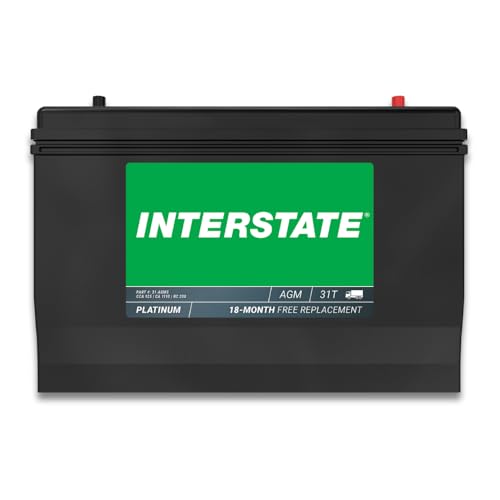
- Best for: Heavy winching on car haulers and equipment trailers
- Capacity: 100 amp hours
- Cranking output: 925 CCA, 1110 CA
- Reserve capacity: 200 minutes
- Group size: 31

- Best for: A permanent tongue-box battery on a working utility trailer
- Capacity: 100 amp hours
- Max discharge current: 1100A for 5 seconds
- Dimensions: 13.1 x 6.9 x 8.6 inches
- Weight: 63.9 pounds

- Best for: Regular winching on utility and boat trailers
- Capacity: 100 amp hours
- Max discharge current: 1150A
- Group size: 31
- Dimensions: 12.99 x 6.73 x 8.43 inches
All 5 Picks at a Glance
| Product | Specs | Action |
|---|---|---|
| Interstate Batteries Marine/RV Battery 12V 100Ah (31-AGM5) |
| Check price on Amazon |
| Renogy Deep Cycle AGM 12 Volt 100Ah Battery |
| Check price on Amazon |
| WEIZE Deep Cycle AGM 12 Volt 100Ah Battery |
| Check price on Amazon |
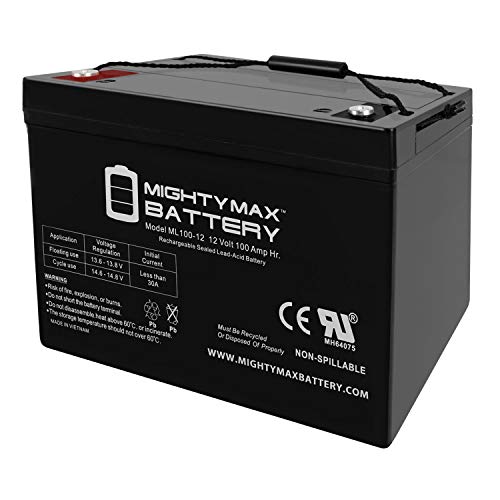 Mighty Max Battery ML100-12 |
| Check price on Amazon |
 LiTime 12V 100Ah Trolling Motor LiFePO4 Battery |
| Check price on Amazon |
Key takeaways
- Five 12V batteries for trailer winches compared on discharge strength, capacity, group size and charging, from dual purpose AGM to a light LiFePO4 pick.
A trailer winch lives or dies by the battery feeding it. The motor pulls heavy current in short, hard bursts, and a battery that cannot hold voltage under that load leaves you with a half-loaded vehicle and a stalled drum. The real decision is not just capacity: it is whether the battery can deliver the surge your winch asks for, survive deep discharges, and fit the box you actually have room for on the tongue or in the trailer bed.
This roundup suits owners mounting a dedicated battery on a utility, boat or car-hauler trailer, whether the winch works daily or sits for weeks between pulls. Each pick was chosen from its Amazon listing name and specifications, focusing on discharge figures, group size, terminal style and charging limits rather than marketing claims.
Quick Picks
As an Amazon Associate we earn from qualifying purchases.
| Product | Best for | Key spec from title |
|---|---|---|
| Interstate Batteries Marine/RV Battery 12V 100Ah (31-AGM5) | Hard pulls on heavy trailers | 925 CCA |
| Renogy Deep Cycle AGM 12 Volt 100Ah Battery | A proven deep cycle bank | 1100A max discharge |
| WEIZE Deep Cycle AGM 12 Volt 100Ah Battery | Regular winching on utility trailers | 1150A max discharge |
| Mighty Max Battery ML100-12 | Smaller Group 27 battery boxes | Group 27 case |
| LiTime 12V 100Ah Trolling Motor LiFePO4 Battery | Lightweight carry-on power | 100A BMS |
How to Choose
Match Discharge Strength to Your Winch’s Amp Draw
Every winch maker publishes a maximum amp draw, and your battery has to meet that figure at the moment the load bites. A 9,000-pound winch can pull several hundred amps near stall, while a small 2,500-pound utility winch may stay near 100 amps. Lead-acid batteries answer with a short-burst discharge figure or a cranking amp number; lithium packs answer with a BMS continuous limit that can shut the battery down mid-pull if the winch asks for more. Compare the two numbers before anything else, because a battery with huge capacity but weak discharge output will still sag, heat up and stall the drum under a heavy vehicle.
Capacity and How Deep You Can Drain It
Amp hours describe the fuel tank, but chemistry decides how much of that tank you may actually use. A 100Ah lead-acid battery should regularly give up only about half its charge if you want a decent service life, so plan on roughly 50 usable amp hours. A 100Ah LiFePO4 pack can use nearly its full capacity, which is why lithium feels bigger than its label suggests. Count your pulls per outing, add any lights, breakaway systems or tongue jacks sharing the battery, and size the bank so a normal day ends well above empty.
Group Size, Terminals and the Battery Box
Group numbers are physical case sizes, not power grades. Group 31 is the big footprint at roughly 13 inches long, Group 27 trims about an inch, and Group 24 is smaller again. Measure your box or tray before ordering, including lid clearance for cables. Terminal style matters just as much: some of these batteries use M8 bolt posts, some use internal thread posts, and winch cables usually arrive with ring lugs that need a flat, tight connection. Sealed AGM cases can mount on their side in a tongue box, while a lithium pack’s lighter weight makes a removable setup realistic.
Charging and Storage Habits
The seven-pin tow plug trickle from your truck will not refill a hard-worked winch battery between stops; plan on a standalone charger matched to the chemistry. AGM batteries have a stated maximum charge current, 30 amps on the Renogy below, and lithium packs need a LiFePO4 charge profile plus low-temperature protection if the trailer lives outside in winter. Storage is the quiet killer: lead-acid self-discharges a few percent each month and sulfates when left flat, so a battery that sits all winter needs a maintenance charge, while lithium stores best partly charged and wakes up with far less loss.
The 5 Best Options
Interstate Batteries Marine/RV Battery 12V 100Ah (31-AGM5)
- Best for: Heavy winching on car haulers and equipment trailers
- Capacity: 100 amp hours
- Cranking output: 925 CCA, 1110 CA
- Reserve capacity: 200 minutes
- Group size: 31
Heavy winching on car haulers and equipment trailers
The Group 31 case is the largest common size here, so measure your battery box, and budget tongue weight for a 60-pound battery.
If your trailer winch drags dead vehicles, tractors or loaded equipment, this dual purpose AGM is the pick built for that punishment. The listing pairs a full 100Ah of deep cycle capacity with a 925 CCA cranking figure, so the same battery that feeds long, slow pulls can also deliver the sharp surge a loaded winch demands at startup. Interstate builds it with thick plates for continuous discharge and a pure lead AGM design, and the 200-minute reserve capacity gives you a deep well for repeated pulls in one session.
Renogy Deep Cycle AGM 12 Volt 100Ah Battery
- Best for: A permanent tongue-box battery on a working utility trailer
- Capacity: 100 amp hours
- Max discharge current: 1100A for 5 seconds
- Dimensions: 13.1 x 6.9 x 8.6 inches
- Weight: 63.9 pounds
A permanent tongue-box battery on a working utility trailer
It is the heaviest battery here, and Renogy advises avoiding discharge below half capacity to protect cycle life.
Renogy’s 100Ah AGM is the safe, well-documented choice for a fixed trailer battery bank. Its listing states an 1100A maximum discharge current for five seconds, comfortably above what mid-size trailer winches draw, and a self-discharge rate under 3 percent per month, which suits trailers that sit between jobs. The M8 bolt terminals take winch ring lugs cleanly, the sealed case needs no watering, and Renogy publishes a clear 30A maximum charge current and a two-year prorated warranty, so the ownership rules are spelled out before you buy.
WEIZE Deep Cycle AGM 12 Volt 100Ah Battery
- Best for: Regular winching on utility and boat trailers
- Capacity: 100 amp hours
- Max discharge current: 1150A
- Group size: 31
- Dimensions: 12.99 x 6.73 x 8.43 inches
Regular winching on utility and boat trailers
The listing’s warranty runs one year, shorter than the Renogy’s two-year cover, and the burst figure is a five-second number, not a continuous one.
The WEIZE matches the Renogy on the headline numbers and trims a little weight doing it. Its listing claims a 1150A maximum discharge current, the highest burst figure in this group, inside a Group 31 case that weighs 57 pounds according to the product information. A 3 percent self-discharge rate and maintenance-free sealed construction make it an easy battery to bolt into a trailer box and forget between weekends. For owners who winch a boat, a mower or a project car a few times a month, it covers the duty without asking for special chargers or handling.
Mighty Max Battery ML100-12
- Best for: Compact battery boxes on small and mid-size trailers
- Capacity: 100 amp hours
- Group size: 27
- Dimensions: 12.09 x 6.65 x 8.48 inches
- Terminals: Internal thread (INT)
Compact battery boxes on small and mid-size trailers
The listing publishes no maximum discharge figure, so pair it with small to mid-size winches rather than the largest recovery units.
Not every trailer has room for a Group 31 case, and the ML100-12 is the pick for those smaller boxes. It packs the same 100Ah capacity into a Group 27 case about an inch shorter than the big batteries here, with internal thread terminals that accept bolted ring lugs for winch cables. The listing describes a UL-certified, spill-proof AGM battery that can mount in any position except upside down, handy for tight tongue boxes and inside-frame mounts. It is a straightforward deep cycle battery for owners whose winch work is steady rather than extreme.
LiTime 12V 100Ah Trolling Motor LiFePO4 Battery
- Best for: Portable power for light and mid-duty trailer winches
- Nominal voltage: 12.8 volts
- Capacity: 100 amp hours, 1280Wh
- BMS: 100A, with 300A discharge for 5 seconds
- Group size: 31
Portable power for light and mid-duty trailer winches
The 100A continuous BMS ceiling is real; a big winch pulling hard can trip the protection and stop mid-pull, so check your winch’s draw first.
At 22.1 pounds, the LiTime changes how a winch battery can live on a trailer: light enough to carry on and off, store indoors, and share with a boat or camper. The listing gives 100Ah and 1280Wh of energy, a built-in 100A BMS, a 300A discharge allowance for five seconds, and more than 4,000 cycles at full depth of discharge, several times the usable life of the lead-acid picks. Low-temperature charging protection and a five-year warranty round out a pack aimed at owners who winch with smaller trailers and lighter loads.
Which One Fits Your Situation
You Winch Dead Vehicles Onto a Hauler Every Week
Choose the Interstate 31-AGM5. Weekly recovery work is a cycle of short, brutal pulls, and its combination of 925 CCA cranking strength, 100Ah capacity and 200 minutes of reserve is built for exactly that rhythm. The dual purpose design also tolerates the deep discharges that come with a long day of loading.
Your Battery Lives Permanently in a Tongue Box
Take the Renogy or the WEIZE. Both are sealed Group 31 AGM batteries with published burst figures above 1100A, low self-discharge for parked trailers, and bolt terminals that suit fixed winch cables. The Renogy adds a longer warranty; the WEIZE saves a few pounds and keeps the same case size.
Your Trailer Only Fits a Group 27 Box
The Mighty Max ML100-12 is your pick. It keeps the full 100Ah capacity in the shorter Group 27 case, mounts in almost any position, and its internal thread terminals make a tidy fixed installation. Just keep the winch size moderate, since the listing does not publish a burst discharge figure.
You Want One Battery for Several Jobs
Pick the LiTime LiFePO4. At roughly a third of the lead-acid weight, it can move between the trailer, a boat and a camper, and its deep usable capacity suits mixed duty. Keep it paired with smaller winches whose draw stays within the 100A continuous BMS limit, and use a lithium-profile charger.
Common Mistakes
- Buying on amp hours alone and never checking the discharge figure against the winch’s maximum draw.
- Expecting the tow vehicle’s seven-pin plug to recharge a drained winch battery between jobs.
- Ordering a Group 31 battery for a Group 24 or 27 box without measuring the tray and lid clearance.
- Running a lead-acid battery completely flat on every outing, which shortens its life dramatically.
- Bolting winch cables to loose or corroded terminals, then blaming the battery for a slow pull.
Frequently Asked Questions
Can I Run a Trailer Winch From the Tow Vehicle’s Battery?
You can, but long cable runs from the truck battery to a trailer winch lose voltage along the way, and a hard pull can leave your starting battery drained. A dedicated battery mounted near the winch, charged separately, delivers stronger pulls and keeps the truck out of the equation.
How Big a Battery Does a 4,500-Pound Winch Need?
Check the winch maker’s stated maximum amp draw first; winches in this class often pull somewhere around 150 to 250 amps near full load. A 100Ah deep cycle battery with a published burst figure above that draw, like the AGM picks here, handles repeated pulls without sagging badly.
Is Lithium Safe for Winch Duty?
LiFePO4 chemistry itself handles deep discharge well, but the battery’s BMS sets a hard current ceiling. The LiTime here allows 100 amps continuously and 300 amps for five seconds, so it suits smaller winches. For a large recovery winch, a high-discharge AGM such as the Interstate is the safer match.
How Should I Charge a Trailer Winch Battery?
Use a standalone charger matched to the chemistry: a smart AGM charger for the lead-acid picks, respecting the Renogy’s 30A maximum, and a LiFePO4-profile charger for the lithium pack. Recharge soon after a day of winching, and give a stored lead-acid battery a maintenance charge every month or two.