Our Short List of 3

- Best for: range estimation and long, deliberate looks from a brace or mount
- Magnification: 15x
- Objective lens diameter: 50mm
- Reticle: MRAD ranging reticle
- Part number: RT155
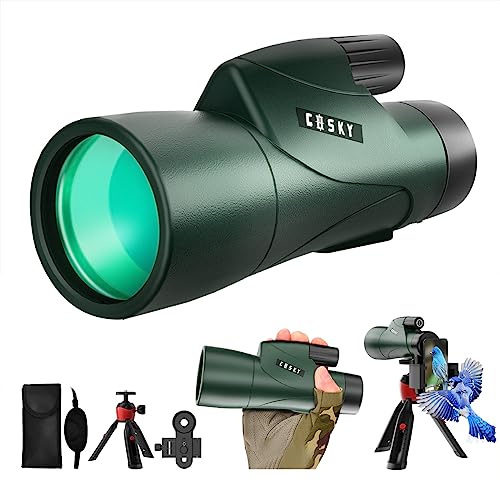
- Best for: phone photography through the eyepiece and low-light birding at distance
- Magnification: 12x
- Objective lens diameter: 55mm
- Prism: BAK4, 18mm
- Lens coating: fully multi-coated

- Best for: hikers and travelers who glass while moving and focus one-handed
- Magnification: 12x
- Objective lens diameter: 50mm
- Field of view: 246 ft at 1,000 yards
- Weight: 14 oz
All 3 Picks at a Glance
| Product | Specs | Action |
|---|---|---|
| Vortex Optics Recon R/T 15×50 |
| Check price on Amazon |
| Gosky 12×55 HD |
| Check price on Amazon |
| Wingspan Optics Explorer 12×50 |
| Check price on Amazon |
Key takeaways
- Compare three high magnification monoculars at 15x and 12x, with 50mm and 55mm objectives, a ranging reticle, BAK4 prisms and phone adapters.
Choosing a high magnification monocular is really a decision about steadiness. Power above 10x brings distant detail close, but it also magnifies every tremor in your hands, narrows the field you can search with, and shrinks the exit pupil that keeps the image bright at dawn and dusk. The real question is how much power you can hold still, whether you plan to mount the optic, and what you will point it at once the novelty of big numbers wears off.
This shortlist is for hunters who read sign at long range, birders working far shorelines, and range users who want reach without a full spotting scope. Every pick is a fixed-power monocular of 12x or more, chosen from Amazon listings and their published specifications: one 15x model with a ranging reticle, and two 12x models with large objectives and support options for steadier viewing.
Quick Picks
As an Amazon Associate we earn from qualifying purchases.
| Product | Best for | Key spec from title |
|---|---|---|
| Vortex Optics Recon R/T 15×50 | Range estimation at distance | 15×50 with MRAD ranging reticle |
| Gosky 12×55 HD | Phone photos through the eyepiece | 12×55 with smartphone adapter |
| Wingspan Optics Explorer 12×50 | One-hand focus while moving | 12×50 with single hand focus |
How to Choose
Match Power to How Steady You Can Hold It
Magnification multiplies everything, including shake. At 12x most adults can hold a monocular steady for short looks, bracing elbows on knees or a pack when the view needs to settle. At 15x the image dances far more, fine detail smears, and long sessions tire the eye quickly. Work out your honest limit before buying: if you mostly glass while standing on a trail, 12x is the practical ceiling. If you sit, lean, or mount the optic, 15x becomes usable and its extra reach turns into real detail instead of blur. A quick field check helps: read a distant sign at the power you are considering, and note whether the letters hold still long enough to read twice.
Weigh Objective Size Against Brightness and Bulk
The second number in a monocular name is the objective lens in millimeters, and it sets how much light the optic gathers. Divide it by the magnification and you get the exit pupil: a 12×55 delivers about 4.6mm, a 12×50 about 4.2mm, and a 15×50 only about 3.3mm. Bigger exit pupils look brighter in low light and are easier to keep aligned with your eye. The trade is physical size. A 55mm tube is chunkier in a pocket and heavier on a lanyard than a 50mm tube, so balance dawn brightness against carry comfort. Weight also creeps upward with lens diameter, and an optic left in the truck gathers no light at all, however large its front lens may be.
Decide Whether a Ranging Reticle Earns Its Place
Most monoculars give a plain, clean view. A ranging reticle etches a measuring scale into that view, so an object of known height can be turned into a distance estimate with simple math. Hunters, range users, and anyone who reports positions in the field get real value from it. Everyone else pays for a busier image: the markings sit in the center of the picture and can distract when the goal is watching birds or scenery. Decide which viewer you are before paying for glass you will either rely on daily or wish away. Reticle models also tend to cost more than plain tubes of similar optical quality, so the scale needs to earn its keep on your outings.
Plan Support Before You Need It
High power rewards support, so check how each monocular accepts it. A standard tripod thread on the body lets you mount the optic on a small tripod, a monopod, or a window mount for long, calm looks. Some models bundle a table tripod or a phone adapter, which matters if you want photos through the eyepiece. Also check the focus layout: a large single wheel near the eyepiece works one-handed, while stiff or tiny wheels slow you down when a subject moves. Support you already own should steer the pick as much as the optics do. A window mount or a bean bag on a fence post counts too, if the body attaches securely.
The 3 Best Options
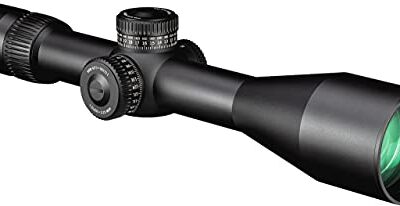
Vortex Optics Recon R/T 15×50
- Best for: range estimation and long, deliberate looks from a brace or mount
- Magnification: 15x
- Objective lens diameter: 50mm
- Reticle: MRAD ranging reticle
- Part number: RT155
range estimation and long, deliberate looks from a brace or mount
the reticle markings sit in the view at all times, and 15x shake makes freehand scanning tiring
This is the reach pick, built for readers of distant ground. Fifteen power with a 50mm objective pulls detail out of far ridges, range boards, and harbor markers that 12x models leave vague, and the MRAD ranging reticle turns known-size targets into distance estimates without a second device. Rubber armor, a non-slip grip, and an adjustable eyecup suit gloved, deliberate use, and the utility clip keeps the tube on a vest or pack strap between looks. It asks for support or a solid brace to shine, and in return it behaves like a compact spotting scope with a measuring scale built in.
Gosky 12×55 HD
- Best for: phone photography through the eyepiece and low-light birding at distance
- Magnification: 12x
- Objective lens diameter: 55mm
- Prism: BAK4, 18mm
- Lens coating: fully multi-coated
phone photography through the eyepiece and low-light birding at distance
the phone adapter needs careful alignment before the image circle fills the screen
The Gosky pairs 12x reach with the largest objective on this page, a 55mm front lens fed by an 18mm BAK4 prism and fully multi-coated glass. That combination keeps the exit pupil generous, so early and late light stays usable longer than the raw power figure suggests. The bundled smartphone adapter is the draw for digiscoping: clamp a phone to the eyepiece, focus once, and distant birds or moon detail become shareable photos instead of memories. The body stays light for its lens size, and the single focus wheel is placed for one-handed use while the other hand holds the phone or a rail.
Wingspan Optics Explorer 12×50
- Best for: hikers and travelers who glass while moving and focus one-handed
- Magnification: 12x
- Objective lens diameter: 50mm
- Field of view: 246 ft at 1,000 yards
- Weight: 14 oz
hikers and travelers who glass while moving and focus one-handed
the maker positions this optic for daytime use, so plan dawn sessions accordingly
The Explorer is the walker option: 12x power in a 14 oz tube with a focus wheel shaped for a single hand, so the other hand keeps a trekking pole, a leash, or a rail. Fully multi-coated optics and a waterproof, fogproof build cover the usual trail abuse, and the 246-foot field at 1,000 yards is wide for this power class, which makes finding a moving bird or boat noticeably easier than with narrower glass. A small tripod comes in the box for camp-table viewing, and the armored body shrugs off the bumps that end cheaper tubes.
Which One Fits Your Situation
Reading Distant Markers and Estimating Range
Pick the Vortex Recon R/T. The 15x reach resolves small detail at distance, and the MRAD reticle converts the height of a sign, post, or target frame into a range estimate on the spot. Brace it on a pack or mount it, work in short looks, and it does a job neither 12x model attempts. Glass quality is the premium story here, with fully multi-coated optics behind the reticle.
Photographing Birds and Wildlife With a Phone
Pick the Gosky 12×55 HD. Its adapter is part of the kit rather than an afterthought, the 55mm objective feeds the phone sensor more light, and 12x is enough power to fill a frame across a pond or field edge. Set the adapter up at home first, because alignment is fiddly with cold fingers. Once the clamp position is marked, field setup drops to seconds and the phone stays put between shots.
Scanning Ridges and Shorelines on Foot
Pick the Wingspan Explorer 12×50. One-hand focus, a comparatively wide field for 12x glass, and a 14 oz carry weight suit stop-and-glass walking better than heavier tubes. The included tripod covers lunch stops, and the sealed build means a wet morning does not end the outing or fog the view. It is the easiest of the three to lend to a companion, since the focus layout explains itself in seconds.
Common Mistakes
- Buying the largest magnification number on the box without a plan to brace or mount the optic, then blaming the glass for a shaky image
- Ignoring exit pupil and expecting a 15×50 to stay bright at dusk, when its roughly 3.3mm exit pupil passes far less light than a 12×55
- Expecting a wide, sweeping field at high power, when field of view always narrows as magnification climbs
- Trusting inflated zoom claims on no-name listings, where printed power often far exceeds the usable optical power
- Skipping the tripod thread and adapter check, then finding the monocular cannot mount to the support you already own
Frequently Asked Questions
Is 15x Too Much Power to Hold by Hand?
For short, braced looks, 15x works: elbows on knees, a pack, or a fence rail calm the image to read detail. For long freehand scanning it tires the eye and smears fine detail. Most buyers who walk and glass are happier at 12x, and should only choose 15x when support is part of the routine. A monopod under the tube changes the answer, turning 15x into a steady, usable view.
What Does a Ranging Reticle Actually Do?
The reticle prints a measuring scale across the view. If you know the height or width of something in that view, a fence post, a sign, a target frame, the scale and a simple formula turn its apparent size into a distance estimate. It adds real function for range and field work, and mild clutter for pure sightseeing. With practice the estimate lands close enough for field decisions.
Can I Use a High Power Monocular With Glasses On?
Yes, with the right eyecup. Adjustable or twist-up eyecups set the eye at the correct distance from the rear lens, so glasses wearers can fold the cup down and keep the full field. Check that the model you pick lists an adjustable eyecup, and expect to remove the glasses only if the field still clips at the edges.
Will a Smartphone Adapter Fit My Phone?
Adapters in these kits clamp around the eyepiece and grip most mainstream phone bodies, then align the camera lens with the exit pupil by sliding and tightening. Thick cases and very large camera bumps can defeat the clamp, so fit the adapter with the case off and practice the alignment before a trip depends on it.