Our Short List of 3

- Motor: 6.2-amp induction
- Swing: 10 inches
- Speeds: 5 speeds, 610 to 2,800 RPM, belt changed
- Spindle travel: not stated
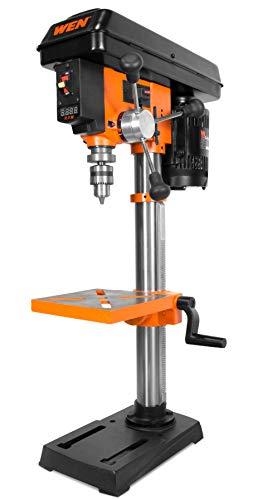
- Motor: 6.2-amp induction
- Swing: 10 inches
- Speeds: mechanical variable speed, 530 to 3,100 RPM, with digital readout
- Spindle travel: 2 inches
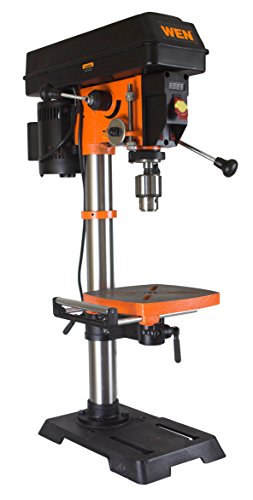
- Motor: 5-amp induction
- Swing: 12 inches
- Speeds: mechanical variable speed, 580 to 3,200 RPM, with digital readout
- Spindle travel: 3-1/8 inches
All 4 Picks at a Glance
| Product | Specs | Action |
|---|---|---|
| SKIL DP9505-00 10-Inch 5-Speed Benchtop Drill Press |
| Check price on Amazon |
| WEN DP1062V 10-Inch Variable Speed Benchtop Drill Press |
| Check price on Amazon |
| WEN 4214T 12-Inch Variable Speed Benchtop Drill Press |
| Check price on Amazon |
 SHOP FOX W1680 17-Inch Floor Model Drill Press |
| Check price on Amazon |
Key takeaways
- Compare the best drill presses for home workshops, from compact 8-inch benchtop models to a 17-inch floor press, with specs on swing, speed and chuck size.
A drill press does one job a handheld drill cannot match: it puts holes exactly where you marked them, at a true right angle to the work, again and again. For furniture joinery, metal brackets, pen blanks, or a run of identical shelf-pin holes, that repeatability is the difference between parts that fit and parts that need re-drilling. The five drill presses in this guide cover the range most home workshops need, from a compact 8-inch benchtop machine to a full-height 17-inch floor model.
The picks below were chosen on capacity and control rather than brand loyalty. Swing, spindle travel, speed range, and chuck size decide what a press can handle, so each section lists those figures in full. Four of the five are benchtop models, because most shops cannot spare the floor space a standing press demands.
As an Amazon Associate, we earn from qualifying purchases.
How to Choose a Drill Press
Start with swing, because it caps the size of work you can drill. Swing is twice the distance from the chuck to the column, so an 8-inch press reaches the center of an 8-inch-wide board, and a 12-inch press handles the middle of a 12-inch panel. Buy at least that much swing. Spindle travel is the second figure that matters: how far the quill moves down in one stroke. Two inches is fine for boards and sheet metal, but boring a 4×4 post in one pass calls for a longer stroke.
Speed control comes in two forms. Belt-driven presses offer fixed speeds, changed by moving a belt between pulleys under the top cover. Mechanical variable-speed presses change RPM with a lever while the machine runs, usually with a digital readout. Variable speed is more convenient when you switch between wood and metal often, because large bits in steel want low RPM and small bits in wood want high RPM.
Chuck capacity tells you the largest bit shank the press accepts. A 1/2-inch chuck covers most twist drills and brad points in home shops; a 5/8-inch chuck adds room for larger Forstner bits and hole saws. Also check the table: cast iron that bevels left and right makes angled holes far easier. Finally, be honest about space: benchtop presses are heavy enough that you will not move one often, and a floor press needs a permanent footprint.
WEN 4208T 8-Inch 5-Speed Benchtop Drill Press
The WEN 4208T is the smallest press in this guide and the easiest to fit into a crowded shop. Its 8-inch swing and 2.3-amp motor suit it to the light end of the work: hardware holes in cabinet parts, pen and stopper blanks, and clean holes in thin metal and plastic. The cast-iron table and base keep the compact frame steadier than its size suggests, and at roughly 34 pounds it can be shifted along a bench or stored on a shelf when bench space is needed for assembly.
Speed changes are made the traditional way, by repositioning the belt across five pulley steps, from 740 to 3,140 RPM, which covers small and medium bits in wood comfortably. The locking depth stop helps when a project calls for a row of holes at the same depth, and the keyed chuck takes bits up to its 1/2-inch capacity.
Specs
- Motor: 2.3-amp induction, 1/3 HP
- Swing: 8 inches
- Speeds: 5 speeds, 740 to 3,140 RPM, belt changed
- Spindle travel: 2 inches
- Chuck: 1/2-inch keyed, JT33 spindle taper
- Table: 6.5 x 6.5 inches, bevels 45 degrees left and right
- Weight: 34.2 pounds
- Warranty: 2-year limited
Who it’s for / who should skip
This press suits beginners and small shops drilling mostly small holes in wood, plastic, and thin metal. Skip it if you regularly drill wide panels, thick hardwood, or steel with large bits, because the 8-inch swing and modest motor run out of room and power quickly.
SKIL DP9505-00 10-Inch 5-Speed Benchtop Drill Press
- Motor: 6.2-amp induction
- Swing: 10 inches
- Speeds: 5 speeds, 610 to 2,800 RPM, belt changed
- Spindle travel: not stated
The SKIL DP9505-00 steps up to a 10-inch swing and a stronger 6.2-amp induction motor, which makes it a more comfortable press for mixed wood and metal work. Five belt-driven speeds from 610 to 2,800 RPM give it a lower bottom end than the WEN 4208T, and that slower speed is useful when a larger bit needs to cut steel without overheating. The 10-inch swing covers most drawer boxes, small tabletops, and project panels.
Alignment help is built in. A laser alignment system projects a guide at the drilling point, and an LED work light brightens the table area. An adjustable depth stop supports repeatable blind holes, and the table tilts up to 45 degrees in either direction for angled work.
Who it’s for / who should skip
This press suits hobbyists who split time between woodworking and light metal work and want laser guidance at the bit. Skip it if you dislike belt swaps for speed changes, or if your work needs a chuck larger than 1/2 inch.
WEN DP1062V 10-Inch Variable Speed Benchtop Drill Press
- Motor: 6.2-amp induction
- Swing: 10 inches
- Speeds: mechanical variable speed, 530 to 3,100 RPM, with digital readout
- Spindle travel: 2 inches
The WEN DP1062V keeps the 10-inch swing of the SKIL but replaces belt changes with a mechanical variable-speed system. A lever adjusts the speed anywhere from 530 to 3,100 RPM while the press runs, and a digital readout shows the current RPM, so matching speed to bit size becomes a quick adjustment instead of a chore. The 6.2-amp induction motor gives it the same power class as the SKIL, with a 1/2-inch keyed chuck on a JT33 spindle taper.
The cast-iron worktable measures 8 by 7.5 inches and bevels 45 degrees left and right. A Class IIIA laser marks the drilling point, and a depth stop handles repeated holes. At just under 34 inches tall, it is a full-size benchtop machine, so check your bench-to-shelf clearance first.
Who it’s for / who should skip
This press suits woodworkers who move between materials in a single session and want speed changes without opening the belt cover. Skip it if your bench has low overhead clearance, or if you need more than 10 inches of swing.
WEN 4214T 12-Inch Variable Speed Benchtop Drill Press
- Motor: 5-amp induction
- Swing: 12 inches
- Speeds: mechanical variable speed, 580 to 3,200 RPM, with digital readout
- Spindle travel: 3-1/8 inches
The WEN 4214T is the largest benchtop press in this guide: a 12-inch swing, 3-1/8 inches of spindle travel, and a 5/8-inch keyed chuck. That combination handles jobs the smaller presses cannot, including boring the center of 12-inch panels, drilling deeper holes in one stroke, and running larger Forstner bits. The 5-amp motor drives a mechanical variable-speed system from 580 to 3,200 RPM with a digital speed display.
The 9.5 by 9.5-inch cast-iron table bevels for angled drilling and adds a roller extension supporting longer stock off the table edge. A laser guide and work light are built in. At 85 pounds, this is a bolt-it-down machine; plan on a sturdy bench and help during setup.
Who it’s for / who should skip
This press suits serious home woodworkers who want floor-press capacity without giving up floor space, and anyone drilling deep or wide work on a bench. Skip it if your bench is light or shared, because the weight and footprint demand a dedicated, solid station.
SHOP FOX W1680 17-Inch Floor Model Drill Press
- Motor: 1 HP, 110V, single phase, 10-amp full-load rating
- Swing: 17 inches
- Speeds: 12 speeds, 140 to 3,050 RPM, belt changed
- Spindle travel: 3-1/4 inches
The SHOP FOX W1680 is the floor-standing option in this guide, built around a 1 HP motor and a 17-inch swing. The big throat reaches the center of wide panels and cabinet sides no benchtop press here can handle, and the tall column leaves room under the chuck for posts, thick blanks, and work held in a vise. Twelve belt-driven speeds from 140 to 3,050 RPM reach lower than any benchtop pick in this guide, which is what large bits in steel and dense hardwood call for.
The round cast-iron table measures 14 inches across and tilts for angled drilling, with 3-1/4 inches of spindle travel for deep holes. A 5/8-inch chuck on a JT3 taper takes large bits, and the machine includes a work light socket and a paddle switch with a removable safety key. At 66 inches tall and 185 pounds, it needs a permanent, level spot and help during assembly.
Who it’s for / who should skip
This press suits established shops that drill wide panels, thick stock, and metal with large bits, and have floor space to dedicate. Skip it if you work in a small garage or mostly drill small parts, because a benchtop model does that work for far less room.
Frequently Asked Questions
What size drill press do most home workshops need?
A 10-inch benchtop press is the practical middle ground. It reaches the center of 10-inch-wide work, fits on a standard bench, and pairs with a 1/2-inch chuck that covers common bit sizes. Move up to 12 inches for wide panels or large Forstner bits, and consider a floor model only when tall work is a regular need.
Is variable speed worth it over a belt-driven press?
It depends on how often you change materials. Belt-driven presses are simple and durable, but each speed change means opening the cover and moving the belt. A variable-speed press changes RPM with a lever and a digital readout, which is faster when one session jumps between small bits in wood and large bits in metal.
Can a drill press drill metal as well as wood?
Yes, with the right speed and bit. Metal wants slower RPM, steady feed pressure, and cutting oil. A press that reaches down near 600 RPM or lower handles most home metal work, and the floor model in this guide goes to 140 RPM for large bits. Clamp thin sheet metal to a backing board so the bit does not grab and spin the work.
How much bench or floor space does a drill press take?
Benchtop models here stand roughly 24 to 37 inches tall and need a bench sturdy enough for 34 to 85 pounds. A floor press needs a footprint of about 15 by 27.5 inches and full standing height. Leave side room for long boards to pass across the table.
Final Verdict
For most readers, the WEN DP1062V is the balanced pick: a 10-inch swing, a 6.2-amp motor, lever-controlled variable speed with a digital readout, and a laser, all in a benchtop footprint. The SKIL DP9505-00 suits buyers who prefer belt-driven speeds and a lower 610 RPM starting point for metal. Where space is tight, the WEN 4208T covers small, precise work well. Step up to the WEN 4214T for a 12-inch swing, a 5/8-inch chuck, and deeper spindle travel, and choose the SHOP FOX W1680 when wide panels, tall work, and very low speeds justify a permanent floor machine. Match the swing and chuck to your work, and any of these five will drill straighter holes than a handheld drill ever will.
Product and ASIN Reference
| Product | ASIN |
|---|---|
| WEN 4208T 8-Inch 5-Speed Benchtop Drill Press | B08ZVT5JKC |
| SKIL DP9505-00 10-Inch 5-Speed Benchtop Drill Press | B0BFQYZPQK |
| WEN DP1062V 10-Inch Variable Speed Benchtop Drill Press | B0DQ9BTQVR |
| WEN 4214T 12-Inch Variable Speed Benchtop Drill Press | B09253MVXN |
| SHOP FOX W1680 17-Inch Floor Model Drill Press | B0000DD101 |