Our Short List of 3
All 5 Picks at a Glance
| Product | Specs | Action |
|---|---|---|
 WONITAGO Kayak Paddle Premium Carbon Fiber | Check price on Amazon | |
 WONITAGO Full Carbon Fiber Greenland Paddle | Check price on Amazon | |
 OCEANBROAD Full Carbon Fiber Adjustable Kayak Paddle | Check price on Amazon | |
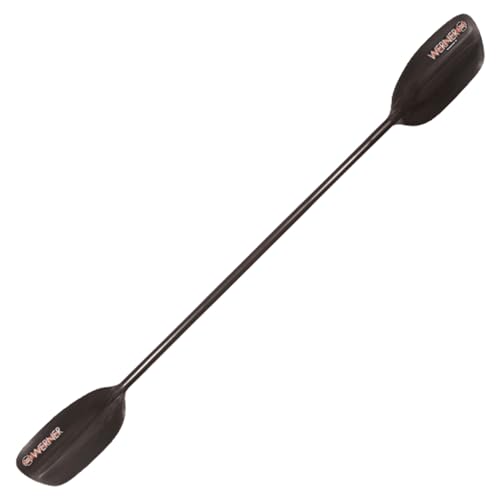 Werner Desperado Whitewater Paddle | Check price on Amazon | |
 SeaSense X-TREME Kayak Paddle | Check price on Amazon |
Key takeaways
- Carbon and fiberglass kayak paddles compared side by side, with five verified picks covering full carbon, hybrid and fiberglass-shaft designs.
Disclosure: As an Amazon Associate, we earn from qualifying purchases.
Our top pick: WONITAGO Kayak Paddle Premium Carbon Fiber. Runner-up: WONITAGO Full Carbon Fiber Greenland Paddle.
Carbon vs fiberglass is the first real decision in buying a kayak paddle, because the shaft and blade material decides the three things a paddler feels on every stroke: weight, stiffness and flex. A carbon paddle is lighter and stiffer, so more of each stroke goes into moving the boat and less energy is lost to the shaft bending. A fiberglass paddle flexes more, which softens the stroke, and fiberglass generally shrugs off knocks against rocks, ramps and docks that a paddler would rather not give a carbon blade. Neither material wins everywhere; the right answer depends on the water, the distance and how much contact the paddle is likely to take.
This guide compares five kayak paddles with verified Amazon US listings, split by material: three on the carbon side and two on the fiberglass side. One of the carbon picks is actually a hybrid, with a carbon shaft and fiberglass-reinforced blades, and it is the clearest illustration of the trade-off because it puts both materials in a single paddle. One honest note before the picks: the carbon side of this comparison is better documented than the fiberglass side. The two fiberglass-side picks rest on thinner listing coverage, and their sections say so plainly, so confirm their details on the product page before ordering.
Quick Picks
- WONITAGO Kayak Paddle Premium Carbon Fiber — Best all-round pick: a carbon shaft with fiberglass and polypropylene reinforced blades, adjustable from 220 to 240 cm.
- WONITAGO Full Carbon Fiber Greenland Paddle — Lightest in this guide at 23 oz: full carbon shaft and blade in a traditional Greenland shape.
- OCEANBROAD Full Carbon Fiber Adjustable Kayak Paddle — Best shorter option: a carbon wing-blade paddle adjustable from 210 to 220 cm, with a bag and leash included.
- Werner Desperado Whitewater Paddle — Fiberglass-shaft pick for whitewater: a one-piece 200 cm paddle with carbon-reinforced nylon blades.
- SeaSense X-TREME Kayak Paddle — Longest in this guide at 96 in: the fiberglass-side option for paddlers who need extra length.
WONITAGO Kayak Paddle Premium Carbon Fiber
OUR TOP PICK
The WONITAGO Premium is the bridge product in this comparison, and the best place to begin, because it splits the difference between the two materials instead of forcing a choice. The shaft is carbon fiber, which is where stiffness and weight saving matter most: the shaft is the part that flexes under load and the part the paddler holds for hours. The blades are fiberglass and polypropylene reinforced, which makes them more forgiving of contact with rocks and concrete than a full carbon blade would be, while the carbon shaft keeps the stroke feeling direct.
The practical details are strong for a general-purpose paddle. As stated on the listing, it adjusts from 86 to 94 inches (220 to 240 cm), so one paddle covers a wide range of paddler heights and boat widths. It breaks down into three pieces for transport and storage, weighs around 2 lb, and the feathering angle adjusts to plus or minus 60 degrees with a quick pin-button lock. It also floats, which matters the first time a paddle slips off a deck or out of a hand in open water. For a paddler who wants most of the carbon benefit without committing to full carbon blades, this is the balanced answer.
Specs
– Shaft: carbon fiber, as stated on the listing
– Blades: fiberglass and polypropylene reinforced, as stated on the listing
– Length: adjustable 220–240 cm (86–94 in)
– Construction: 3-piece
– Weight: around 2 lb, as stated on the listing
– Feathering: ±60 degrees, quick pin-button lock, as stated on the listing
– Buoyancy: floats, as stated on the listing
Pros
– Carbon shaft stiffness and low weight where they matter most
– Reinforced blades are more forgiving of contact than full carbon blades
– Wide 220–240 cm adjustment range and a 3-piece breakdown for storage
– Floats if dropped in the water
Cons
– The blades are not full carbon, so it is not the lightest paddle in this guide
– A 3-piece design has more joints than a 2-piece or 1-piece paddle
WONITAGO Full Carbon Fiber Greenland Paddle
The second WONITAGO is the full carbon answer. Both the shaft and the blade are carbon fiber, and the blade is a Greenland shape: long and narrow, in the style of traditional Greenland paddling, rather than the wide blade most recreational paddles use. That shape changes the stroke. A narrow blade loads the shoulders less per stroke and suits a steady, distance-covering rhythm, which is exactly the kind of paddling where a light paddle pays off most.
The weight figure is the headline: as stated on the listing, this paddle is 23 oz (0.65 kg), the lightest in this guide by a clear margin. It adjusts from 220 to 230 cm (86 to 90 in) with a quick cam-lock regulator, breaks down into two pieces, and comes with a paddle bag included. Choose it when low weight and the Greenland stroke style are the priorities, and when the paddling is distance work on open water rather than pushing off rocks in a river. It is the runner-up here only because its blade shape is a deliberate specialisation, where the hybrid above is the more general tool.
The Greenland shape also changes how the paddle behaves at the catch. A wide blade bites the water all at once, which feels powerful for a few strokes and tiring for a few thousand. A narrow Greenland blade enters more gradually and builds load through the stroke, so the paddler can hold a rhythm for hours and roll or brace with the same tool. That is the context in which the 23 oz weight matters most: this is a paddle built to be swung all day, and every part of the specification, from the full carbon build to the cam-lock joint, serves that purpose.
Specs
– Construction: full carbon fiber shaft and blade, as stated on the listing
– Blade shape: Greenland
– Length: adjustable 220–230 cm (86–90 in)
– Construction format: 2-piece
– Weight: 23 oz (0.65 kg), as stated on the listing
– Adjustment: quick cam-lock regulator, as stated on the listing
– Included: paddle bag
Pros
– Lightest paddle in this guide at 23 oz
– Full carbon construction in both shaft and blade
– Paddle bag included, and a 2-piece breakdown for transport
– Cam-lock length adjustment is quick to change on the water
Cons
– The narrow Greenland blade will not suit paddlers who want a wide, powerful blade
– A narrower 220–230 cm length range than the hybrid above
OCEANBROAD Full Carbon Fiber Adjustable Kayak Paddle
The OCEANBROAD completes the carbon side with a different blade idea: a wing blade. A wing blade is shaped and scooped so it grips the water and pulls through with a distinctive, self-centring feel, a style borrowed from racing paddles. Paired with a carbon fiber build, it gives this paddle the most technical stroke character of the three carbon picks, and paddlers who like that feel tend to stick with it.
Its length range is the shortest in this guide: as stated on the listing, it adjusts from 82 to 86 inches (210 to 220 cm), which suits smaller paddlers and narrower boats better than the longer WONITAGO models. It is a 2-piece paddle, and it is supplied with both a paddle bag and a paddle leash, so the safety tether that many paddlers buy separately is already in the box. Pick it when the shorter length range fits and the wing blade appeals; taller paddlers and wide fishing kayaks will run out of length here.
Specs
– Material: carbon fiber, as stated on the listing
– Blade shape: wing blade
– Length: adjustable 210–220 cm (82–86 in)
– Construction format: 2-piece
– Included: paddle bag and paddle leash, as stated on the listing
Pros
– Wing blade gives a distinct, grippy pull through the water
– Shortest length range in this guide, suiting smaller paddlers and narrower boats
– Paddle leash included as well as a bag
Cons
– The 210–220 cm range will not fit taller paddlers or wide boats
– A wing blade takes some getting used to for paddlers coming from flat blades
Werner Desperado Whitewater Paddle
The Werner Desperado leads the fiberglass side, and it should be described accurately: this is a fiberglass-shaft paddle, not an all-fiberglass one. The one-piece shaft is fiberglass made with recycled material, and the blades are carbon-reinforced injection-moulded nylon. That combination is a deliberate whitewater recipe. The fiberglass shaft provides the flex that absorbs knocks against rock and softens hard strokes in moving water, while the reinforced nylon blades take impacts that would be a worry for full carbon blades.
At 200 cm in a fixed one-piece length, it is the shortest and simplest paddle in this guide: no joints, no adjustment, nothing to work loose. That is the right trade for whitewater, where control and durability matter more than fine length tuning, and where a paddle is pushed off rocks and braced against the riverbed as a matter of routine. The recycled material in the shaft is a further point in its favour for paddlers who weigh that factor, and it costs the design nothing in function: fiberglass is fiberglass in the hand, whatever its source. One caution: the listing evidence for this paddle is thinner than for the carbon picks above, so confirm the construction and length on the product page before ordering.
Specs
– Shaft: 1-piece fiberglass, recycled material, as stated in the listing copy checked for this guide
– Blades: carbon-reinforced injection-moulded nylon
– Length: 200 cm, fixed
Pros
– Fiberglass shaft flex suits whitewater contact and hard bracing
– One-piece construction with no joints or adjustment hardware
– Reinforced nylon blades are built for impact rather than outright stiffness
Cons
– Fixed 200 cm length with no adjustment
– The blades are nylon, not fiberglass, so read the construction carefully
– Listing coverage is thinner than the carbon picks; verify the details on the product page
SeaSense X-TREME Kayak Paddle
The SeaSense X-TREME is the second fiberglass-side pick, and its headline is length: at 96 inches it is the longest paddle in this guide. Length is a genuine need for some setups. Taller paddlers, wide fishing kayaks and high seating positions all push the correct paddle length upward, and a paddle that is too short forces a steep, tiring stroke angle and drips water into the lap. For those paddlers, a 96-inch option on the fiberglass side is worth having in the line-up.
The honesty note matters more here than anywhere else in this guide. Beyond the 96-inch length in its name, detailed specifications for this paddle were not confirmed in the research behind this guide, and the listing evidence behind it is thin. Treat the product page as the source of truth: confirm the shaft and blade construction, the weight and whether it breaks down before ordering. Paddlers who want a fully documented fiberglass-shaft paddle should weigh the Werner above first; the SeaSense earns its place as the extra-long option, pending that listing check.
Specs
– Length: 96 in, as stated in the product name
– Other specifications: not confirmed from the listing checked for this guide; confirm on the product page
Pros
– Longest paddle in this guide at 96 in, for tall paddlers and wide boats
– Gives the fiberglass side a long-length option the Werner does not cover
Cons
– Specifications beyond the length were not confirmed; check the live listing carefully
– Verification behind this pick is thinner than for the carbon side
How to Choose
Begin with the material trade-off itself, because everything else follows from it. Carbon is the choice when weight and stiffness lead: a carbon shaft wastes less of each stroke in flex, and a light paddle is noticeably easier on the shoulders over a long day. Fiberglass is the choice when flex and contact tolerance lead: the shaft gives a little, the stroke feels softer, and the paddle is the one to push off rocks, ramps and shallow riverbeds with. The hybrid in this guide exists precisely because many paddlers want the first set of qualities in the shaft and the second in the blades.
Next, match length to the paddler and the boat. The paddles here span a fixed 200 cm whitewater length, adjustable ranges of 210–220 cm, 220–230 cm and 220–240 cm, and a 96-inch long option. Taller paddlers, wider boats and higher seats all call for more length; a whitewater paddler wants the opposite, a shorter paddle for quick, controlled strokes.
Then consider blade shape. A wide or reinforced blade gives an immediate, powerful catch. A Greenland blade trades that catch for a gentler load and a rhythm suited to distance. A wing blade sits in its own camp, with a pull-through feel that rewards a practiced forward stroke. None of these is an upgrade on the others; they are different tools.
Feathering and joints deserve a thought as well. A feathered paddle, where the two blades sit at an angle to each other, cuts wind resistance on the recovery stroke, and the hybrid in this guide adjusts that angle to plus or minus 60 degrees, so a paddler can experiment rather than commit. Joint design matters for feel: a cam-lock or pin-button connection that locks solidly keeps a take-apart paddle feeling like one piece, while a loose joint wastes the stiffness the shaft material was chosen for. A one-piece paddle such as the Werner removes the question entirely, at the cost of being the hardest format to transport and store.
Finally, think about breakdown and verification. A 3-piece paddle packs smallest, a 2-piece is the common middle ground, and a 1-piece whitewater paddle removes joints entirely. And whichever side of the comparison you land on, open the product page and confirm the construction, length and weight figures there, especially for the two fiberglass-side picks, whose listing coverage in this guide is thinner.
FAQs
Is carbon or fiberglass better for a kayak paddle?
Neither is better in the abstract. Carbon is lighter and stiffer, which suits distance paddling and paddlers who count weight. Fiberglass flexes more and tolerates contact better, which suits rivers, rocky launches and general recreational use where the paddle will be knocked around. The hybrid at the top of this guide shows the middle path: a carbon shaft with reinforced blades.
What does a hybrid paddle like the WONITAGO Premium actually change?
It changes where each material works. The carbon shaft keeps the stroke stiff and the overall weight down, while the fiberglass and polypropylene reinforced blades are more forgiving when they strike rocks or concrete than full carbon blades would be. For a paddler who does a mix of open water and rough launches, that split is the practical answer to the carbon vs fiberglass question.
How do I choose the right paddle length from this guide?
Start with the paddler and the boat rather than the paddle. Smaller paddlers in narrow boats sit at the short end, covered here by the 210–220 cm OCEANBROAD and the fixed 200 cm Werner for whitewater. Average setups fall in the 220–240 cm span of the two WONITAGO models. Tall paddlers, wide fishing kayaks and raised seats push toward the longest options, which is where the 96-inch SeaSense belongs.
Conclusion
The carbon vs fiberglass paddle decision comes down to what the paddle will actually do. For most paddlers, the WONITAGO Kayak Paddle Premium Carbon Fiber is the top pick because it refuses to choose badly: carbon stiffness in the shaft, forgiving reinforced blades, a wide length range and a floating, three-piece build. The WONITAGO Full Carbon Fiber Greenland is the runner-up and the lightest paddle here, for distance paddlers who want the Greenland style. The OCEANBROAD covers the shorter, wing-blade corner of the carbon side. On the fiberglass side, the Werner Desperado is the documented whitewater choice, and the SeaSense X-TREME adds the long 96-inch option, with the caveat that its details need confirming on the live listing before ordering.