Our Short List of 3
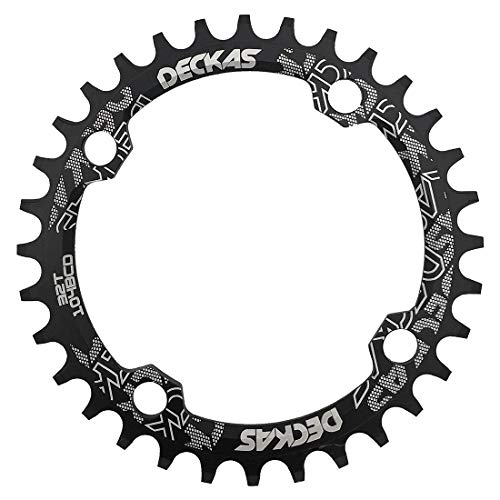
- Best for: steep climbs and first-time 1x conversions on a tight budget
- Mount: 104 BCD
- Teeth: 30T
- Material: 7075 aluminum alloy, anodized surface
- Chain compatibility: listed for 6- to 12-speed chains

- Best for: SRAM direct-mount riders who want a long-lasting steel ring
- Mount: SRAM 3-bolt direct mount, 3 mm offset
- Teeth: 34T
- Material: Steel
- Weight: 6.6 oz

- Best for: the lowest climbing gear on a Shimano XT 12-speed 1x setup
- Mount: Shimano direct mount for M8100 and M8130 cranks
- Teeth: 28T
- Material: Aluminum
- Weight: 3.2 oz
All 3 Picks at a Glance
| Product | Specs | Action |
|---|---|---|
| DECKAS 104 BCD 30T |
| Check price on Amazon |
| SRAM X-Sync 2 Steel 34T |
| Check price on Amazon |
| Shimano XT SM-CRM85 28T |
| Check price on Amazon |
Key takeaways
- Find the best narrow wide chainring for your 1x drivetrain. Compare 104 BCD, direct-mount and steel options for MTB, gravel and trail riding.
A narrow wide chainring is the part that decides whether a 1x drivetrain keeps its chain on rough ground or drops it at the worst moment. The mount, the tooth count and the chain match are all fixed at the moment of purchase, so a ring that does not fit the crank cannot be adapted later, and a gear that is too tall turns every steep climb into a walk. Buyers have to settle the mount standard first, then the gearing, then the chain, and each of those decisions narrows the field fast.
This article is for mountain bikers converting an old 2x or 3x bike to a single ring, gravel riders building a simple 1x setup, and anyone replacing a worn ring on a Shimano or SRAM crank. The four rings below were chosen from names and specifications listed on their Amazon product pages, covering bolt-on 104 BCD rings in two sizes, a steel direct-mount ring for SRAM cranks, and a direct-mount ring for Shimano XT cranks.
Quick Picks
As an Amazon Associate we earn from qualifying purchases
| Product | Best for | Key spec from title |
|---|---|---|
| Race Face Narrow Wide 38T | Fast trail riding on a 104 BCD crank | 104 BCD, 38T, 50 g |
| DECKAS 104 BCD 30T | Steep climbs on a tight budget | 104 BCD, 30T, 7075 aluminum |
| SRAM X-Sync 2 Steel 34T | Long wear on a SRAM direct-mount crank | 3-bolt direct mount, 34T, steel |
| Shimano XT SM-CRM85 28T | Lowest climbing gear on Shimano XT 12-speed | Direct mount, 28T, 3.2 oz |
How to Choose
Match the mount to your crank before anything else
A chainring mount is either a bolt circle or a direct-mount interface, and the two never interchange. A 104 BCD ring bolts onto a four-bolt spider, holes 104 mm apart across the circle, the most common standard on older mountain bike cranks and many aftermarket spiders. A direct-mount ring threads straight onto the crank arm and only fits the crank family it was made for, so a SRAM 3-bolt ring will not fit a Shimano crank and a Shimano ring will not fit a SRAM crank. Measure across two opposite bolt holes on a bolt-on crank, or check the crank model stamped on the arm, before ordering anything.
Pick the tooth count for the climbs you actually ride
Tooth count sets the gearing, and the right number depends on the steepest ground the rider climbs rather than the fastest stretch of trail. A 28T or 30T ring gives a low bailout gear that keeps the pedals turning on loose, sustained climbs, which is why small rings suit conversions and riders carrying luggage. A 34T ring sits in the middle and works for mixed trail riding with moderate climbs. A 38T ring is a tall gear built for hardpack, fire roads and fast rolling terrain, and it punishes the legs on anything steep. Choosing by top speed instead of climbing need is the usual error.
Match the chain speed and the tooth profile
Narrow wide teeth alternate a narrow tooth that sits between the inner chain links with a wide tooth that fills the outer links, and that pattern only works when the tooth profile matches the chain. Rings are listed for specific chain speeds, such as 6- to 12-speed or 10- to 12-speed, and a 12-speed chain is narrower than a 9-speed one, so the fit is not automatic. SRAM Eagle chains and Shimano 12-speed Hyperglide+ chains each have their own tooth shaping, and a ring designed for one may not seat the other cleanly. Read the chain compatibility line on the product page and compare it with the chain already on the bike.
Weigh material, weight and what comes in the box
Aluminum rings are light and cheap, which is why most 104 BCD rings use 7075 aluminum, while steel rings weigh more and last far longer under gritty, wet riding. A 50 g aluminum ring saves noticeable weight on a climbing bike, but a steel ring is the better call for a rider who wears out drivetrains quickly or rides through winter slop. The box contents matter too: some rings ship with no bolts at all, some include four steel bolts, and reusing worn or corroded bolts on a new ring is a false economy. Check whether bolts are included and whether the ring is round or oval before paying.
The 4 Best Options
Race Face Narrow Wide 38T
The Race Face ring is the straightforward pick for a rider whose crank already has a 104 BCD spider and whose trails are fast rather than steep. Its 38 teeth give a tall gear that holds speed on hardpack and fire roads, while the narrow wide tooth pattern keeps the chain seated without a guide on rough descents. At 50 g it adds almost nothing to the bike, and the four-bolt mount fits the most common crank standard there is, so installation is a matter of four bolts and a torque wrench rather than a new crank.
Specs
- Mount: 104 BCD, 4-bolt
- Teeth: 38T
- Weight: 50 g
- Part number: RNW104X38GRN
- Finish: Green
- Chain compatibility: listed for 10- to 12-speed chains
Best for: fast trail and fire-road riding on a 104 BCD crank
Watch out for: green is the only finish in this variant, and 38T is a tall gear, so confirm the lowest climbing gear is low enough for the steepest local climb
DECKAS 104 BCD 30T
- Best for: steep climbs and first-time 1x conversions on a tight budget
- Mount: 104 BCD
- Teeth: 30T
- Material: 7075 aluminum alloy, anodized surface
- Chain compatibility: listed for 6- to 12-speed chains
steep climbs and first-time 1x conversions on a tight budget
some 104 BCD cranks have spider tabs that foul the inner edge of a small ring, so check clearance between the ring and the spider before ordering
The DECKAS 30T is the ring for turning a tired 2x or 3x mountain bike into a simple 1x machine without spending much. Thirty teeth is a climbing gear, and it changes the character of a bike that used to need a front derailleur to get up a loose hill. The ring is machined from 7075 aluminum with an anodized surface, and its listing covers 6- through 12-speed chains, so the cassette already on the bike is rarely the deciding factor. Four bolts and a torque wrench are all the installation asks for, which makes it a good first conversion ring.
Watch out for: some 104 BCD cranks have spider tabs that foul the inner edge of a small ring, so check clearance between the ring and the spider before ordering
SRAM X-Sync 2 Steel 34T
- Best for: SRAM direct-mount riders who want a long-lasting steel ring
- Mount: SRAM 3-bolt direct mount, 3 mm offset
- Teeth: 34T
- Material: Steel
- Weight: 6.6 oz
SRAM direct-mount riders who want a long-lasting steel ring
steel weighs more than aluminum, and the 3-bolt direct-mount interface only fits SRAM cranks, so confirm the crank model before ordering
The SRAM X-Sync 2 steel ring is the pick for a rider who keeps wearing out aluminum rings and wants the replacement to last. Steel gives up lightness for durability, and at 34 teeth it sits in the middle of the gearing range, low enough for real climbs and tall enough for rolling trail. The X-Sync 2 tooth profile is shaped to hold an Eagle chain and to shed mud, and the ring mounts directly to a SRAM crank with three bolts and a 3 mm offset. It is a workhorse part rather than a weight-saving one, and that is the point.
Watch out for: steel weighs more than aluminum, and the 3-bolt direct-mount interface only fits SRAM cranks, so confirm the crank model before ordering
Shimano XT SM-CRM85 28T
- Best for: the lowest climbing gear on a Shimano XT 12-speed 1x setup
- Mount: Shimano direct mount for M8100 and M8130 cranks
- Teeth: 28T
- Material: Aluminum
- Weight: 3.2 oz
the lowest climbing gear on a Shimano XT 12-speed 1x setup
it fits only Shimano M8100 and M8130 direct-mount cranks and will not bolt onto a 104 BCD spider
The Shimano XT SM-CRM85 in 28T is the lowest gear in this group, and it exists for riders whose trails point uphill more than they point down. It mounts directly to Shimano M8100 and M8130 cranks, and its Dynamic Chain Engagement+ tooth profile is shaped for the brand’s 12-speed chains, with special teeth that grip the chain harder over bumpy ground. At 3.2 oz in aluminum it stays light for a bailout gear, and the 28 teeth turn a steep, loose climb into something that can be pedalled rather than walked.
Watch out for: it fits only Shimano M8100 and M8130 direct-mount cranks and will not bolt onto a 104 BCD spider
Which One Fits Your Situation
Converting an old 2x or 3x mountain bike to 1x
Pick the DECKAS 104 BCD 30T. A conversion usually starts with a crank that already has a 104 BCD spider, and the 30T size gives the low gear that makes a single ring usable on climbs the old triple used to handle. The wide chain compatibility means the existing cassette and chain often carry over, and the low cost keeps the experiment cheap if the gearing needs a second try.
Riding fast trails on a 104 BCD crank
Pick the Race Face Narrow Wide 38T. The tall gear suits hardpack, fire roads and rolling singletrack where speed matters more than crawling up a grade, and the light weight keeps the bike feeling quick. The four-bolt mount goes straight onto the spider the rider already owns, and the narrow wide teeth hold the chain without adding a guide.
Wearing out rings on a SRAM Eagle drivetrain
Pick the SRAM X-Sync 2 Steel 34T. Steel outlasts aluminum under grit and wet riding, and the 34T size is a balanced middle gear for mixed trail days. The direct-mount interface and the Eagle-specific tooth shaping mean the ring is made for the drivetrain it will run on, rather than adapted to it.
Needing a bailout gear on a Shimano XT 12-speed bike
Pick the Shimano XT SM-CRM85 28T. It is the only ring here made for Shimano M8100 and M8130 cranks, and the 28 teeth give the lowest gear in the group for steep, loose climbs. The Dynamic Chain Engagement+ profile is shaped for the brand’s 12-speed chain, so the fit is exact rather than approximate.
Common Mistakes
- Ordering a ring by tooth count alone and discovering the BCD or direct-mount interface does not match the crank
- Choosing a tall 38T gear for speed and then walking every steep climb on the local trails
- Fitting a 12-speed chain to a ring shaped for an older chain standard, or the other way around
- Reusing worn chainring bolts, or buying a ring that ships without bolts and finding out on installation day
- Assuming every direct-mount ring fits every crank, when SRAM 3-bolt, Shimano and Race Face Cinch interfaces are all different
Frequently Asked Questions
What does narrow wide mean on a chainring?
Narrow wide describes teeth that alternate between a narrow tooth and a wide tooth around the ring. The narrow tooth sits between the inner links of the chain and the wide tooth fills the outer links, which grips the chain far more firmly than evenly spaced teeth. That grip is what lets a 1x drivetrain run without a front derailleur or a chain guide on rough ground.
Will a narrow wide chainring work with my chain?
It works when the tooth profile and the chain speed match, so check the compatibility line on the product page before ordering. Most rings list a range such as 6- to 12-speed or 10- to 12-speed, while some are shaped for one system only, such as SRAM Eagle or Shimano 12-speed Hyperglide+. A chain from a different system may sit poorly or wear the teeth faster.
Do I need a chain guide with a narrow wide ring?
Most riders do not, because the alternating teeth hold the chain well enough on ordinary trail riding. A guide still makes sense for downhill racing, very rough enduro terrain, or a bike whose chainline is already marginal. If the chain has dropped more than once on familiar trails, a guide is cheaper than a lost chain on a descent.
How do I measure BCD on my crank?
BCD is the diameter of the circle through the centres of the chainring bolt holes. On a four-bolt crank, measure straight across between two opposite bolt holes, and the result should read 104 mm for the most common standard. On a five-bolt crank, measure between two adjacent holes and multiply by 1.701. If the crank uses direct mount, there is no BCD at all, so match the crank model instead.