Key takeaways
- Compare the best play tents for kids and families, from pop-up playhouses to tunnel tents with mesh windows, carry bags and easy setup for indoor play.
A play tent turns an ordinary corner of a living room into a fort, a spaceship, or a quiet reading nook, and the best ones do it without tools, poles, or a long setup. Kids crawl in, close the flap, and the tent becomes their own small world for an afternoon. Parents get a toy that folds flat, tucks behind a door, and comes back out the next rainy day.
The five tents below cover the range families actually need: a dome with a crawl tunnel for active toddlers, a giant eight-piece maze for playdates, a rocket ship for space fans, a three-piece astronaut set, and a plain, low-cost dome for a first tent. Each one pops open in seconds, packs into its own bag, and suits indoor play with outdoor use on calm days.
Quick Picks
As an Amazon Associate we earn from qualifying purchases
| Product | Best for | Key spec |
|---|---|---|
| Pacific Play Tents Safari Fun Dome Tent and Crawl Tunnel Combo | Active toddlers who love to crawl | 48 x 48 x 42 inches, dome plus tunnel |
| UTEX 8-in-1 Pop Up Play Tent House | Big playdates and group play | 8 pieces, 4 tents plus 4 tunnels |
| JOYIN Rocket Ship Pop Up Play Tent | Space fans and pretend missions | 41.5 x 41.5 x 57 inches, rocket shape |
| UTEX 3pc Space Astronaut Pop Up Play Tents | Small groups and space themes | 3 pieces, tipi plus square tent plus tunnel |
| Pacific Play Tents Primary Pop-Up Play Tent | A first tent on a small footprint | 29 x 29 x 33 inches, 1.2 pounds |
How to Choose
Match the size to the room
Measure the floor before you buy. A dome around 48 inches square suits two or three small kids and still fits a bedroom corner. A giant eight-piece set needs a whole playroom or a living room with the furniture pushed aside. A compact dome near 29 inches square fits one child and slides under a bed when folded. Remember the tent also needs room around it: kids crawl in and out, and tunnels stick out sideways. Leave a clear path to the door so the tent never blocks a walkway. A tent that fits the room gets used every day; one that crowds the room stays folded in a closet.
Look for pop-up frames and simple folds
The best play tents open with a spring frame and no loose poles. You pull the tent from its bag, let it pop open, and play begins. Folding it back down takes a twist and a tuck that parents learn after a few tries, so check that the maker includes a folding guide and a bag that fits the folded tent. Sets with several pieces should link together with simple clips or hook-and-loop tabs, not fiddly ties. Avoid sets that need poles threaded through sleeves every time, because that chore kills the habit of putting the tent away. A tent that opens fast and folds flat gets used more than a clever one that takes ten minutes to build.
Check fabric, mesh, and ventilation
Kids spend long stretches inside a tent, so airflow matters. Look for mesh panels or a mesh roof that lets air move and lets you see in without opening the flap. Polyester taffeta is the common fabric: it wipes clean, holds bright prints, and resists tears from daily crawling. A waterproof floor helps when the tent goes outside or when a drink tips over inside. Seams should feel firm and double-stitched, and poles should carry a safety coating so nothing splinters. Keep the tent away from open flames and heaters, and check the fabric label for the maker care notes before the first wash.
Think about ages and group play
Age labels are the first filter. Most pop-up tents suit ages 3 and up, with a choking-hazard note for small parts, so keep them away from babies and toddlers under 3. A single dome suits one or two kids; a tunnel combo or an eight-piece set suits three or four at once and works well for playdates. Themes matter too: a rocket or astronaut set pulls space-mad kids in, while a plain dome leaves more room for open-ended games. If siblings share the tent, pick a size that fits the oldest child standing inside, not just the youngest crawling in.
The 5 Best Options
Pacific Play Tents Safari Fun Dome Tent and Crawl Tunnel Combo

The Safari Fun Dome pairs a roomy jungle-print dome with a crawl tunnel that clips on, so one toy covers both quiet hiding and active crawling. The dome measures 48 by 48 by 42 inches, with skylight windows for light and a view in, plus a waterproof floor for backyard use. The 190T polyester taffeta fabric wipes clean, and metal poles with a safety coating hold the shape. It folds flat into its own carry bag when play ends. Ages run from 2 years, per the maker, though the tunnel suits kids who already crawl with confidence.
Specs
- Brand: Pacific Play Tents
- Model: 20435
- Dimensions: 48 x 48 x 42 inches
- Weight: 5.05 pounds
- Material: Textile, polyethylene
- Frame: Metal
- Theme: Jungle Safari
- Included: Carry bag, dome tent, tunnel
Best for: Active toddlers who want a tent and a crawl tunnel in one set.
Watch out for: The tunnel is the shortest part of the set, so older kids may outgrow the crawl first.
UTEX 8-in-1 Pop Up Play Tent House

The UTEX 8-in-1 is the biggest set here: four tents and four tunnels that link into one maze or split across rooms. Two square tents and two teepee houses connect through four crawl tunnels, so four kids can play at once without crowding each other. Mesh panels give airflow and a clear view in, and the 190T polyester fabric stands up to daily wear. Everything folds flat into a zippered storage bag. It needs real floor space when fully linked, so it suits a playroom or a basement more than a small bedroom.
Specs
- Brand: UTEX
- Part number: SS17-UTX011
- UPC: 613635712714
- Pieces: 8 (2 square tents, 2 teepee houses, 4 tunnels)
- Material: Polyester
- Weight: 3 pounds
- Age range: 3 to 7 years
- Included: Zippered storage bag
Best for: Playdates and families who want a whole maze, not a single tent.
Watch out for: The full linked layout needs a large open floor, and the corner loops can strain if ground stakes pull hard outdoors.
JOYIN Rocket Ship Pop Up Play Tent

The JOYIN rocket turns a bedroom corner into a launch pad. The white tent stands 57 inches tall with space graphics, portholes, and fins, and four foldable poles plus roof and floor anchors keep it steady during active play. The water-resistant polyester wipes clean with a damp cloth, and the whole tent packs into a carry tote for trips to grandparents or the park. Setup takes a few minutes with the poles and clear instructions. It fits two kids at once, and the tall shape suits reading and pretend missions alike.
Specs
- Brand: JOYIN
- Model: 12229
- Dimensions: 41.5 x 41.5 x 57 inches
- Weight: 2 pounds
- Age range: 3 years and up
- Material: Water-resistant polyester
- Included: Carry tote, 4 foldable poles, roof anchors, floor anchors
Best for: Space fans who want a tall themed tent for pretend play and reading.
Watch out for: The light frame can shift on slick floors, and the floor anchors grip poorly on thick carpet.
UTEX 3pc Space Astronaut Pop Up Play Tents
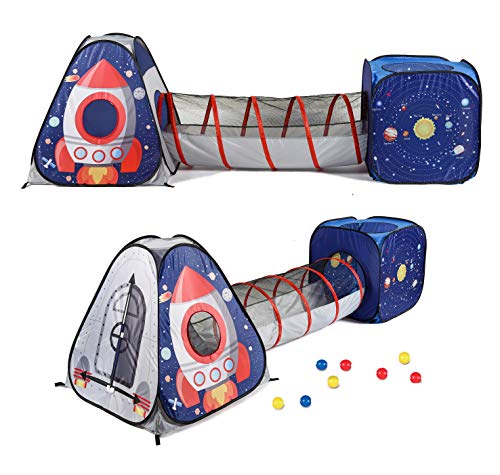
The UTEX astronaut set gives three connected spaces for the cost of one small set: a tipi tent, a square tent, and a crawl tunnel, all printed with astronauts, the solar system, and planets. The pieces link together or stand alone, so kids can build a circuit or keep one tent in a bedroom and one in a playroom. The polyester fabric pops open with no tools, and the set packs into a carry bag. It fits three or four kids at once, which makes it a strong pick for siblings who play together most afternoons.
Specs
- Brand: UTEX
- Part number: SS19-UTX001
- UPC: 613635713216
- Pieces: 3 (tipi tent, square tent, tunnel)
- Material: Polyester
- Weight: 2 pounds
- Age range: 3 years and up
- Included: Carry bag
Best for: Siblings and small groups who want a space-themed circuit to crawl through.
Watch out for: The printed theme is bold, so it suits space fans more than kids who want a plain hideout.
Pacific Play Tents Primary Pop-Up Play Tent

The Primary Pop-Up is the plain, low-cost dome in the Pacific Play Tents line: no theme, no extras, just a sturdy pop-up tent in bright primary colors. It measures 29 by 29 by 33 inches and weighs only 1.2 pounds, so one child gets a cozy hideout that fits a bedroom corner and folds down small enough to slide under a bed. A mesh roof panel keeps air moving, and a roll-up door closes with hook-and-loop tape. It ships with a matching carry bag. For a first tent, or a second tent for a grandparent house, it is hard to beat.
Specs
- Brand: Pacific Play Tents
- Dimensions: 29 x 29 x 33 inches
- Weight: 1.2 pounds
- Roof: Mesh panel
- Door: Roll-up with hook-and-loop tape
- Included: Carry bag
Best for: A first tent for one child, or a spare tent for a small room.
Watch out for: One child at a time is the real limit, and there is no theme or extra gear inside.
Which One Fits Your Situation
A small bedroom or shared playroom
Pick a compact dome like the Primary Pop-Up or the rocket tent, which stand in a corner and leave floor space for other toys. Skip the eight-piece maze unless the room can spare a whole wall. Measure twice: leave room for the door to open and for kids to crawl out without bumping furniture.
A rainy afternoon with active toddlers
A tent-plus-tunnel combo burns energy indoors. The Safari dome and the UTEX sets link crawling to hiding, so kids move between spaces instead of sitting still. Mesh panels let you watch from the sofa, and a wipe-clean floor handles spills. Set the combo near a soft rug so landings stay gentle, and keep a few stuffed animals inside so the tunnel becomes a den. Rotate which piece leads the circuit to keep the game fresh.
A space-mad kid who loves rockets
Go straight for a themed set. The JOYIN rocket stands tall enough for pretend missions and reading, while the UTEX astronaut trio adds a tunnel circuit for siblings. Both carry the solar-system print kids ask for by name. Add glow sticks or a small flashlight inside for night missions, and let the tent double as a reading nook between launches. The theme does half the work: kids invent the mission on their own.
A first tent for a single child
Begin with the plain Primary Pop-Up. It costs little, folds small, and shows whether your child actually plays in a tent before you buy a bigger set. If it becomes a daily hideout, add a tunnel set later. Watch how the tent gets used for a week before adding anything else: a pillow and a few books turn a plain dome into a hideout. If it gathers dust, fold it away and try again in a few months.
Common Mistakes
- Buying the biggest set for the smallest room: measure the floor first, then pick the tent.
- Skipping the age label: most pop-up tents suit ages 3 and up, with small parts that do not belong near babies.
- Forgetting the fold: practice folding the tent once before the kids use it, or the bag will never close again.
- Using a play tent as a camping tent: these are indoor toys with light fabric, not weatherproof shelters for a night outside.
- Leaving the tent up for months: fabric fades and poles bend when a tent lives in sunlight by a window, so fold it away between long play sessions.
Frequently Asked Questions
What age are pop-up play tents made for?
Most pop-up play tents suit kids ages 3 and up, and the maker labels say so on the box. The Safari dome lists ages from 2 years, but its tunnel suits kids who already crawl well. Keep any tent with small parts away from babies and toddlers under 3, and check the age label before you buy.
Can play tents go outside?
Yes, on calm, dry days. The tents here use polyester fabric with waterproof or water-resistant floors, so grass and patio play work well. Bring the tent inside before rain or strong wind, and never leave it out overnight. Ground stakes help on grass, but most families use these tents indoors most of the time.
How do you fold a pop-up tent flat again?
Hold two opposite edges, twist the frame into a figure eight, then fold the loops together into a flat circle. It feels awkward the first time and easy after that. Most makers include a folding guide and a zippered bag; follow the guide once and the tent will slide into its bag without a fight.
How do you clean a fabric play tent?
Wipe the fabric with a damp cloth and mild soap, then let it air dry fully before folding it away. Most polyester tents should not go in a washing machine, and heat can warp the spring frame. Spot-clean spills right away so marks do not set, and keep the tent dry in storage.