Our Short List of 3

- Best for: Families who want the original full-size tower game.
- 54 genuine hardwood blocks
- Stacking sleeve with instructions included
- Ages 6 and up
- 1 or more players

- Best for: Families who know classic Jenga and want new dares.
- Digital die for 6 more ways to play
- 54 genuine hardwood blocks
- Stacking sleeve included
- Ages 6 and up

- Best for: Preschoolers and Bluey fans playing their first tower game.
- 54 colorful illustrated wooden blocks
- 1 game box included
- Ages 3 and up
- 2 to 6 players
All 5 Picks at a Glance
| Product | Specs | Action |
|---|---|---|
| Hasbro Gaming Jenga Classic |
| Check price on Amazon |
| Hasbro Jenga Digital Die Game |
| Check price on Amazon |
| Bluey Tumbling Tower |
| Check price on Amazon |
 Hasbro Jenga Pass Challenge |
| Check price on Amazon |
 Hasbro Gaming Jenga Mini |
| Check price on Amazon |
Key takeaways
- Compare the best tabletop Jenga sets for kids, from classic wooden block towers to colorful stacking games with steady hands and big laughs at home.
A tabletop Jenga set turns an ordinary evening into a hush of held breath. One wobbly block, one careful pull, and the whole tower leans. Kids love the drama, and the game asks for patience, steady hands, and a little courage, all without screens or batteries. The classic format still works because the rules fit on a single breath: pull a block, place it on top, and keep the tower standing.
This guide compares five tabletop sets that suit kids, from the original 54-block tower to a pocket-sized travel version and a character-themed set for younger players. Each pick below is a genuine tabletop set with wooden blocks, sized for a kitchen table, and each one plays the same simple game in a slightly different way. Read the size, block count, and age guidance before you pick, because a set that fits a seven-year-old may feel too easy for a twelve-year-old, and a travel set may feel too small for a family of five.
Quick Picks
As an Amazon Associate we earn from qualifying purchases
| Product | Best for | Key spec from title |
|---|---|---|
| Hasbro Gaming Jenga Classic | The original full-size tower | 54 genuine hardwood blocks |
| Hasbro Jenga Digital Die Game | New dares on the classic game | Digital die for 6 more ways to play |
| Bluey Tumbling Tower | First tower game for ages 3 and up | 54 colorful illustrated wooden blocks |
| Hasbro Jenga Pass Challenge | A hands-held twist for older kids | 27 hardwood blocks on a passing platform |
| Hasbro Gaming Jenga Mini | Travel games and quick rounds | 18 mini hardwood blocks, pocket-sized |
How to Choose
Block count and tower height
Fifty-four blocks build the tall, slow tower most people know, and that height is where the tension lives. A 54-block set such as the classic, the digital die edition, or the Bluey tower gives long games with many turns, while the 27-block Pass Challenge builds a nine-layer tower that finishes faster. The 18-block Mini builds the shortest tower of all, which suits quick rounds rather than long evenings. Count the blocks before you buy, because block count decides how long a game lasts and how dramatic the final wobble feels.
Block size and little hands
Full-size blocks feel solid and forgiving, and they suit kids who are still building fine motor control. A child can grip a classic block with a whole hand, slide it free, and place it on top without the tower shaking apart at the first touch. Mini blocks ask for a lighter touch and steadier fingers, so they suit older kids and travel rather than first-time players. The Bluey set uses full-size blocks with bright art, which helps younger kids see where each piece sits. Match block size to the smallest hands at the table, not the oldest.
Age guidance and who plays
Age guidance on the box is a useful first filter, and the five sets here cover three different bands. Bluey lists ages three and up, so preschoolers can join without waiting for a birthday. The classic, digital die, and Mini sets list ages six and up, which matches the patience and focus most kids bring to a slow, careful game. Pass Challenge lists ages eight and up, because holding a platform while pulling blocks asks for steadier hands and a calmer temper. Treat the guide as a floor, not a verdict: a careful five-year-old may love the classic set, while a restless nine-year-old may prefer the faster Pass Challenge.
Extras that change the game
Every set on this list plays the same core game, and the extras decide how each round feels. A digital die adds dares that push players to use thumbs only or beat the clock, which keeps repeat games fresh for kids who already know the classic. A passing platform turns a table game into a hands-held challenge, so the tower travels around the room. Character art gives younger players a reason to care about each block, while a pocket-sized set trades tower height for portability. Pick the extra that matches how your family actually plays, rather than the one that looks most exciting in the box.
The 5 Best Options
Hasbro Gaming Jenga Classic
- Best for: Families who want the original full-size tower game.
- 54 genuine hardwood blocks
- Stacking sleeve with instructions included
- Ages 6 and up
- 1 or more players
Families who want the original full-size tower game.
The tower needs a flat, steady surface, and the full-size blocks take up real table space.
The original Jenga set is the one most families picture when they hear the name, and it earns that place with simple, honest play. Fifty-four genuine hardwood blocks stack into an eighteen-layer tower inside the included sleeve, and each turn asks one player to slide a block free and balance it on top. The blocks feel solid in small hands, and the sleeve keeps setup quick so kids spend their time playing rather than rebuilding. With an age guide of six and up and room for one or more players, this set suits siblings, cousins, and whole families alike.
Hasbro Jenga Digital Die Game
- Best for: Families who know classic Jenga and want new dares.
- Digital die for 6 more ways to play
- 54 genuine hardwood blocks
- Stacking sleeve included
- Ages 6 and up
Families who know classic Jenga and want new dares.
The die adds rules to learn, so very young players may prefer the plain classic set.
The digital die edition keeps the classic tower and adds six fresh twists, so a game your kids already know suddenly feels new again. The included die calls out dares such as using thumbs only, beating the clock, or placing a block anywhere except the top row, and each dare pushes players to think before they pull. Fifty-four genuine hardwood blocks and the stacking sleeve match the original set, so the tower builds and plays the same way. With an age guide of six and up, this edition suits families who want the familiar game with a little extra spark.
Bluey Tumbling Tower
- Best for: Preschoolers and Bluey fans playing their first tower game.
- 54 colorful illustrated wooden blocks
- 1 game box included
- Ages 3 and up
- 2 to 6 players
Preschoolers and Bluey fans playing their first tower game.
The character art, rather than extra rules, provides most of the difference from classic Jenga.
Bluey fans get their own tower with fifty-four wooden blocks illustrated with Bluey and friends, and the familiar game becomes a story kids already love. The blocks stack into a full-size tower, and each turn follows the same pull-and-place rhythm as classic Jenga, so no new rules stand between a child and the game. With an age guide of three and up, this set opens the tower game to preschoolers who would find the standard set a little too grown-up. The illustrated blocks also give younger players a reason to linger, matching characters while they build.
Hasbro Jenga Pass Challenge
- Best for: Older kids and families who want a hands-held twist on the classic.
- 27 hardwood Jenga blocks
- Passing platform with two handles
- Stabilizing stand included
- Resealable plastic storage bag
Older kids and families who want a hands-held twist on the classic.
The 27-block tower runs shorter than the classic 54-block game, and the platform needs steady hands.
Pass Challenge takes Jenga off the table and into players’ hands, and that single change turns a calm game into a wobbling adventure. Twenty-seven hardwood blocks build a nine-layer tower on a platform with two handles, and each player pulls a block while holding the platform, then hands the whole tower to the next player. Ten challenges in the game guide, from Blind Block to the Chopstick Challenge, keep rounds fresh. With an age guide of eight and up, this set suits older kids and families who want the classic game with a physical twist.
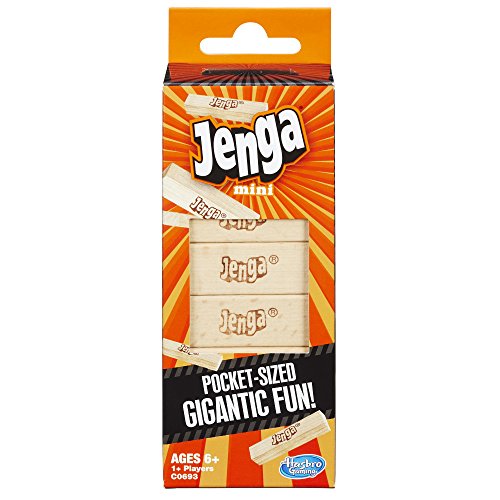
Hasbro Gaming Jenga Mini
- Best for: Travel, waiting rooms, and quick games on the go.
- 18 Jenga mini hardwood blocks (2.375 x 0.8 x 0.48 inches)
- Pocket-sized for travel
- Ages 6 and up
- 1 or more players
Travel, waiting rooms, and quick games on the go.
The mini blocks are small, so this set suits kids six and up rather than toddlers.
Jenga Mini shrinks the classic game to pocket size, and that small footprint makes it the easiest set on this list to carry anywhere. Eighteen mini hardwood blocks stack into a tiny tower that fits on a tray table, a car seat, or a picnic blanket, and the same pull-and-place rules apply, so kids can play a full round in a few minutes. With an age guide of six and up, this set suits travel, waiting rooms, and quick games between bigger activities. It also works as a gentle first Jenga for kids who feel nervous facing a tall tower.
Which One Fits Your Situation
A first tower game for a young child
Pick the Bluey Tumbling Tower when the player is three to five and the game needs to feel friendly. Fifty-four full-size blocks with bright character art give small hands something easy to grip, and the age guide of three and up means no one waits on the sidelines. The familiar pull-and-place rhythm teaches patience without new rules, and the characters give a young child a reason to stay at the table.
A classic set for family game night
Pick the Hasbro Jenga Classic when the whole family plays together and the game needs to last. Fifty-four hardwood blocks build the tall tower everyone knows, and the included sleeve keeps setup quick between rounds. With an age guide of six and up and room for one or more players, this set suits siblings, cousins, and grandparents at the same table, and it never asks anyone to learn new rules.
A travel set for trips and waiting rooms
Pick the Jenga Mini when the game needs to fit in a bag and play anywhere. Eighteen mini hardwood blocks stack into a tiny tower that fits on a tray table or a car seat, and the same pull-and-place rules apply, so a full round takes only a few minutes. With an age guide of six and up, this set suits road trips, waiting rooms, and rainy afternoons when a full-size tower would crowd the table.
A twist for kids who know the classic
Pick the Pass Challenge or the digital die edition when older kids know the classic game and want something new. The Pass Challenge puts the tower on a handled platform that travels from player to player, while the digital die adds six dares such as thumbs only and beating the clock. Both keep the pull-and-place core, so no one relearns the game, and both suit ages eight and up for the platform or six and up for the die.
Common Mistakes
- Buying a giant yard set for a kitchen table. Giant towers belong outdoors, so check the block size and tower height before you buy.
- Picking mini blocks for a first-time player. Tiny blocks ask for steady fingers, so young kids do better with full-size blocks.
- Skipping the age guide. A set made for ages eight and up may frustrate a five-year-old, even when the game looks simple.
- Playing on a wobbly surface. A soft bed or a tilted tray makes the tower fall for the wrong reason, so use a flat, steady table.
- Rushing the pull. A slow, gentle slide keeps the tower standing, while a quick yank brings the whole stack down.
Frequently Asked Questions
How many blocks does a classic Jenga set have?
A classic Jenga set has 54 hardwood blocks, which stack into eighteen layers of three blocks each. The digital die edition and the Bluey tower also include 54 blocks, while the Pass Challenge includes 27 blocks and the Mini includes 18 mini blocks. Count the blocks before you buy, because block count decides how tall the tower grows and how long each game lasts.
What age is Jenga good for?
Jenga suits kids from three and up, depending on the set. The Bluey tower lists ages three and up, the classic, digital die, and Mini sets list ages six and up, and the Pass Challenge lists ages eight and up. Younger players do best with full-size blocks and a little help building the tower, while older kids enjoy the faster pace and extra challenges of the trickier editions.
Can younger kids play Jenga?
Yes, younger kids can play Jenga with the right set and a little patience. The Bluey tower suits ages three and up, with full-size illustrated blocks that small hands can grip and a simple pull-and-place rhythm that needs no reading. Help a young child build the first tower, let them pull from the middle layers, and keep the mood light so a tumble feels funny rather than frustrating.
Is Jenga Mini the same game as classic Jenga?
Yes, Jenga Mini plays by the same pull-and-place rules as classic Jenga, only with smaller blocks. The Mini includes 18 mini hardwood blocks instead of 54 full-size blocks, so the tower grows shorter and each round finishes faster. That small size makes it a strong travel companion, though it asks for steadier fingers, so it suits kids six and up rather than toddlers.